If you’re like most folks who use hose reels—whether for a landscaping business, a commercial job site, or even just maintaining a big residential yard—you’ve probably stared at that tiny label on the side of your reel and wondered, “Wait, what’s the actual maximum PSI I can run this thing at without breaking it?” As a hose reel supplier who’s fielded this question a hundred times a week, let me cut through the jargon and break this down like we’re chatting over a coffee (no stuffy engineer talk, promise). Hose Reel
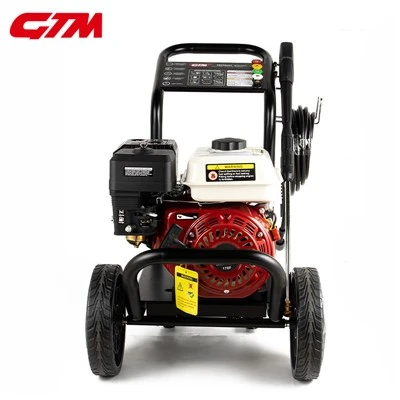
First off, PSI stands for pounds per square inch, right? It’s the measure of water pressure pushing through your hose. Too little and your sprinklers won’t reach the corner of your lawn; too much and you’ll get kinks, leaks, or even a hose that snaps mid-spray. But here’s the thing: there’s no one-size-fits-all number for max PSI on a hose reel. It depends on way more than just the reel itself. Let’s dive into the main factors that determine your reel’s limit, because that’s where most people get confused.
First up: the type of hose reel you’re using. I’ve seen guys bring in $20 wall-mounted plastic reels from a big box store and try to run 100 PSI through them, and it never ends well. Those cheap, light-duty reels are made for regular garden hoses, typically ⅝ inch, with a max PSI of around 100. Wait, hold on—don’t mix that up with the hose’s own PSI! A standard garden hose might have a max PSI of 150, but the reel that holds it is only built to handle 100. That’s a critical difference. Light-duty reels are designed for casual use: small yards, residential gardening, maybe pressure washing a small patio once a year. Push 110 PSI through that, and you’re looking at the reel’s plastic frame warping, the guide arm snapping, or the hose unspooling way too fast and tangling.
Then there are medium-duty reels. These are the workhorses we sell to small landscaping teams, general contractors, and folks who do regular pressure washing (like cleaning driveways or siding). Their max PSI is usually between 150 and 200. These have sturdier frames—steel or heavy-duty polymer—and better winding mechanisms that can handle consistent, higher pressure. For context, a standard residential pressure washer runs around 130–180 PSI, so that lines up. But even medium-duty has a limit, and if you’re running a commercial pressure washer that hits 250 PSI, you can’t use this reel. That’s where heavy-duty comes in.
Heavy-duty hose reels are for the big jobs: commercial pressure washing fleets, agricultural irrigation, construction site water lines, even firefighting setups (though fire reels are a whole other category, we’ll get to that). Their max PSI ranges from 300 all the way up to 500, and some industrial-grade ones can go even higher, like 1000 PSI for heavy industrial use. These have fully steel frames, reinforced spools, and pressure-relief valves built right in to stop you from overloading them. I once had a farmer come in furious because he tried to run a 400 PSI sprayer through his old medium-duty reel (which he’d bought from a random online store) and it blew a seal, flooding his field. Oops. That’s exactly why knowing your reel’s limit matters.
Next, don’t sleep on the hose itself. Even if your reel can handle 300 PSI, if the hose wrapped around it is only rated for 200, that’s where the failure will happen. A lot of people skip checking the hose specs because they assume the reel and hose pair are compatible, but that’s not always the case. For example, a ¼-inch pressure washer hose is common for small machines, but it’s rated for max 400 PSI—so a reel holding that hose can’t exceed 400, no matter what the reel’s label says. On the flip side, a ⅝-inch heavy-duty irrigation hose can handle up to 600 PSI, so the reel holding it might cap out around 500, which is the safer number to go with. The rule of thumb here is: the reel’s max PSI should be equal to or lower than the hose’s max PSI. If the hose is the weak link, that’s your limit.
Another big factor is how the reel is mounted and used. A wall-mounted reel that’s bolted into a stud is totally different from a free-standing reel on a job site. If you’ve got a free-standing reel, it’s on wheels or a base, so it’s not fixed—too much pressure can make it tip over, even if the PSI is within the reel’s technical limit. I’ve seen a reel fall off a job site because a worker cranked the pressure to 180 on a free-standing unit that was only rated for 150. Also, how you unspool the hose matters. If you’re yanking it out too fast, that creates a pressure surge (called water hammer) that spikes the actual PSI way higher than your gauge says. That transient pressure can be 20–30% higher than your steady flow pressure, so if your gauge says 150, you might be hitting 180 in a surge, which could blow a seal on a medium-duty reel. Pro tip: always unspool the hose slowly, and make sure your water line has a pressure regulator to prevent surges.
Wait, what about commercial and industrial certifications? A lot of cheap reels don’t meet any standards, so their “max PSI” is just a guess from the manufacturer. At our company, all our medium and heavy-duty reels are tested to NSF, UL, or CSA standards, so their max PSI is a number we stand behind—no false advertising. If you’re buying a reel, never trust a random number listed on a random website. Ask for test data, or check the label on the reel itself. The label should have the max PSI, max hose length, and hose size right there—if it doesn’t, walk away. That’s a red flag.
Let’s put this all into real examples so it’s not just a bunch of numbers. If you have a residential yard, running a standard pressure washer for your car and patio, that’s a light-duty reel (max 100 PSI) paired with a ⅝-inch hose (max 150 PSI). Stick to 100 PSI, and you’re golden. If you’re a landscaper doing weekly pressure washing on driveways, you need a medium-duty reel (150–200 PSI) and a ¼-inch pressure washer hose rated for 200 PSI. That lets you run your 180 PSI machine without issues. If you’re a construction company using water to control dust on site, you’ll want a heavy-duty reel (300 PSI minimum) with a 1-inch irrigation hose (max 400 PSI) to handle your 250 PSI water line.
Now, what happens if you exceed the max PSI? Let’s be honest, it’s not just a broken reel. You could get a hose burst, which is messy and dangerous—high-pressure water can cut skin, so that’s a safety risk. You’ll waste water, obviously, which is a big deal for businesses. And replacing a reel mid-job is a hassle and a cost you don’t need. I’ve had guys come back to us after a job where they blew their reel, and they’re not just here for a replacement—they’re here to upgrade to a heavy-duty reel because they learned the hard way.
Wait, one last thing: seasonal use? If you’re storing your reel outside in cold weather, the hose can stiffen, and the seals can crack, which lowers the max PSI for a little while. Always let your hose thaw out before using it in the spring, and inspect the seals before cranking up the pressure. That’s a small step that saves you a lot of headache.
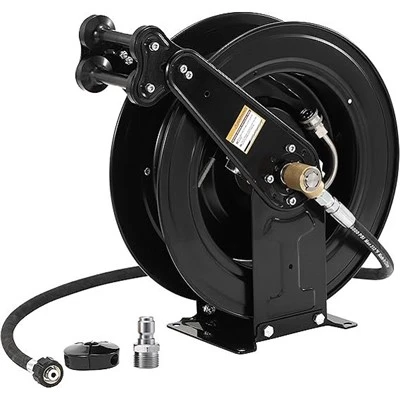
So, to wrap this up: the max PSI for a hose reel isn’t a random number. It’s a combination of the reel’s build quality (light, medium, heavy duty), the hose it’s holding, how it’s mounted, and how you use it. If you’re not sure, don’t guess—reach out. Whether you’re a homeowner looking for a reel for your backyard or a big company needing industrial reels for multiple job sites, we’ve got options for every PSI need. We work with all types, from residential customers to large contractors, and we can help you pick the right reel that fits your pressure requirements. No jargon, no pressure—just straightforward advice. If you need to chat through what you’re working on, send us a message, and we’ll hook you up with the right setup for your project.
Hose Reel References
- American Society of Mechanical Engineers (ASME). "Standard for Pressure Relief Devices for Fluid Systems." ASME Press, 2021.
- International Code Council (ICC). "Residential and Commercial Water Supply System Requirements." ICC, 2022.
- Hose Manufacturers Association (HMA). "Guidelines for Hose-Reel Compatibility and Pressure Ratings." HMA Technical Bulletin, 2023.
- Occupational Safety and Health Administration (OSHA). "Water Pressure Safety for Construction and Agricultural Operations." OSHA, 2021.
Zhejiang GTM Hi-Tech Intelligent Equipment Co., Ltd.
As one of the most professional hose reel manufacturers and suppliers in China, we also support customized service. With abundant experience, we warmly welcome you to buy discount hose reel for sale here from our factory. For price consultation, contact us.
Address: No.5 of Changjiang Road, 2nd Economic Development Zone of Wenling, Zhejiang, China
E-mail: yehuanting1@hongyemfg.com
WebSite: https://www.gtm-plungerpump.com/
