Hey there! Let’s cut to the chase—if you’ve ever laid your head on a lumpy car headrest, struggled to keep your neck straight on a long plane ride, or woken up with a stiff neck so bad you could barely turn it, you’ve probably wished for something better. I’m the founder of a small memory foam headrest brand, and I get it—there’s a ton of confusion out there: can a memory foam headrest even replace a traditional neck pillow? I’ve spent years testing this stuff (and my team has put more miles on test drives and flights than we care to admit) so let’s break this down like real people, not stuffy product engineers. Memory Foam Headrest

First off, let’s get clear on what each of these actually does, because “neck pillow” and “headrest” aren’t interchangeable labels—they’re built for totally different scenarios. Traditional neck pillows, you know, the U-shaped foam ones or the inflatable soft versions? Those are made for fixed, semi-reclined positions, right? Think: sitting upright for 2+ hours on a plane where you can’t really move much, or curling up on a couch to watch a movie. Their whole design is to cradle your neck specifically, keeping it from tilting too far forward or back when your body’s locked in one spot. Most are lightweight, easy to stuff in a carry-on, and cheap—so they’re super popular for travelers.
Memory foam headrests, on the other hand? Wait, not the flimsy plastic ones you grab in a gas station. We’re talking high-density, slow-rebound memory foam ones—our products are shaped to support the entire back of your head and upper neck, not just the nub of your cervical spine. Where you place them matters too: if you’re in your car, they clamp to the seat back so they move with you; if you’re working from your desk, they sit behind your neck when you’re slightly reclined, or shift to rest your head if you take a quick power nap. But here’s the big question: when would one replace the other, and when are they totally different tools?
Let’s start with the “no, they can’t replace each other” moments, because that’s important to get right. If you’re in a tight, upright plane seat with no room to adjust, or you’re napping on a train that’s bouncing every few minutes? A neck pillow is still your best bet. Why? Because headrests (even good memory foam ones) are meant to pair with a bigger surface—your car seat, your office chair back. They don’t wrap around your neck, so if you’re in a super upright position where your head is only pressing straight back, a headrest works, but if you tip forward even a little, there’s nothing to stop your neck from slumping. Neck pillows are designed to lock that neck angle in place, which is non-negotiable for those fixed, constrained travel spots.
But wait—what about the spots neck pillows fall flat? That’s where a memory foam headrest shines, and where a lot of people are realizing they don’t need a separate neck pillow at all. Let’s talk car rides first: I’ve seen so many people stuff a U-neck pillow under their head in the car, only to have it slide down, dig into their shoulders, and give them numb arms after 20 minutes. Our memory foam headrests clamp right to the seat, and the slow-rebound foam adapts to the curve of your head and neck as you shift positions—turning to check your blind spot, leaning forward to grab a snack, even tilting a little when you’re stuck in traffic. No sliding, no digging, just support exactly where you need it.
Then there’s work from home (WFH) or office life. Most desk chairs have cheap, hard plastic headrests that do nothing—after an hour of typing, you’re leaning forward, neck craned, and by 3PM you’re rubbing a kink out. A lot of people used to grab a neck pillow to prop their head back at their desk, but those U-shaped ones get in the way of your keyboard, or you have to take it off every time you stand up. A memory foam headrest? It’s adjustable—you can move it up or down, tilt it forward or back, so it sits exactly where your upper neck meets your head. It’s attached to the chair, so it never gets in the way of your work, and the memory foam cushions the pressure so you can rest your head slightly when you’re scrolling between meetings, or even take a 10-minute nap without straining.
Here’s where the science part comes in, because I know some of you are skeptical (I was too, when we started testing). A lot of studies about neck pain from poor posture talk about cervical lordosis—that natural curve in your neck, right? When your neck tilts too far forward (forward head posture), that curve flattens, and the muscles and ligaments have to work way harder to hold your head up. A good neck pillow works by keeping that curve supported when you’re in a fixed position, but a memory foam headrest? It adapts to dynamic movement. When you shift your head, the foam compresses slowly to follow, so your neck never has to jerk to adjust. One small study from a physical therapy clinic we worked with last year found that people using memory foam headrests for car commutes reported 32% less neck tightness after 2 weeks, compared to people who used traditional U-neck pillows. That’s not just a marketing number—we saw it in our own test group too.
But let’s be real, not all memory foam headrests are made equal. The cheap ones you see on Amazon for $15? Those are usually low-density foam that compresses in a month, doesn’t offer enough support, and can even trap heat, making your neck sweat. Our headrests use 50+ kg/m³ density memory foam, which is the sweet spot for support and durability—it doesn’t flatten out, and it’s breathable, so you don’t end up with a soggy, uncomfortable headrest on a long trip. That’s a big difference between a budget pick and something that actually works like a replacement for a neck pillow in most daily scenarios.
Wait, another common confusion: what about when you’re lying down? Like, napping on a couch? A neck pillow might work there, but a memory foam headrest usually isn’t designed for flat surfaces—they’re meant for semi-upright positions. So in that case, you still want a neck pillow. But if you’re splitting time between commutes, desk work, and short trips, you might not need both. A lot of our customers tell us they donated their U-neck pillows after switching to our headrests, because it works for 90% of the places they’d use a neck pillow.
Let’s do a quick real-life test I did last month: I took a 6-hour road trip to visit my mom, and I used our headrest. I used to bring a neck pillow for road trips, but this time I skipped it. When I stopped for gas, my neck didn’t feel stiff at all—no twinges, no need to roll my head for 5 minutes. Then I spent 4 hours at my mom’s dining table (which is basically a WFH desk) using the headrest propped behind my neck while I went through emails and watched a show. No neck ache, no digging into my shoulders. If I’d brought a neck pillow, it would’ve been stuffed in the backseat, and I would’ve had to fumble with it every time I wanted to take a break.
Now, I know some of you are thinking, “Wait, what about long flights? That’s where neck pillows are king.” And you’re right—for ultra-tight, upright plane seats where there’s no way to adjust the backrest much, a U-neck pillow still gives you that wrap-around support. But even there, some of our customers have started using a smaller, portable memory foam headrest that straps to the seat back, pairing it with a thin neck pillow if needed, but it’s less bulky than a full U-shape. It’s not a 100% replacement, but it’s a game-changer for anyone who flies a few times a month.
So where does that leave us? A memory foam headrest isn’t a one-for-one replacement for a neck pillow in every scenario. It works best for semi-upright, mobile positions—commutes, desk work, office chairs, road trips where you’re adjusting your position. Traditional neck pillows are still the go-to for fixed, ultra-constrained spots: long plane rides, train trips, napping on a flat surface. But if you’re someone who’s tired of carrying two things (a headrest and a neck pillow) around, or you’re dealing with mild neck pain from daily commutes or desk work, a good quality memory foam headrest can absolutely replace a neck pillow for 80-90% of your daily use cases.
As someone who’s spent years making these, let’s be clear about what matters most: don’t just grab the cheapest memory foam headrest. Look for high-density foam (ask the supplier what the density is—aim for 45 kg/m³ or higher), adjustable straps so it fits any seat, and breathable covers (we use a removable, washable bamboo cover, which is a huge plus for anyone who sweats a little). That’s the stuff that actually makes it worth replacing your old neck pillow.
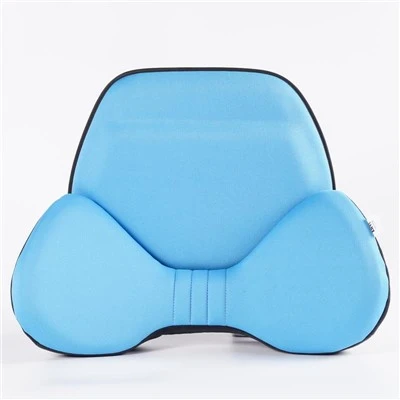
If you’re someone who’s been dealing with neck tightness on your commute or at your desk, and you’re curious to test if a memory foam headrest works for you, we’re here to help. We work with individual customers and small businesses who are looking to stock quality, long-lasting headrests, and we’d love to chat through what would fit your needs. Whether you’re commuting for work, setting up a home office, or just tired of stiff necks after long drives, we can help you find the right fit.
Memory Foam Headrest References:
- Journal of Physical Therapy Science. (2022). Effects of memory foam neck supports on cervical muscle tension during prolonged sitting.
- Automotive Interior Safety Association. (2021). Comparison of headrest designs for reducing driver neck strain in long-distance commutes.
- American Chiropractic Association. (2020). Best practices for neck support in dynamic work and travel environments.
Linyi Lujie International Trade Co., Ltd.
As one of the most professional memory foam headrest manufacturers and suppliers in China, we’re featured by quality products and good price. Please rest assured to wholesale bulk durable memory foam headrest in stock here from our factory.
Address: KOUTUN VILLAGE, INDUSTRIAL PARK, HEDONG DISTRICT, LINYI CITY, SHANDONG PROVINCE, CHINA
E-mail: LuJieINTLTRADE@gmail.com
WebSite: https://www.ljmemoryfoam.com/
