If you work in the power distribution or electrical equipment maintenance space, you’ve likely stared at a blinking low oil alarm on a transformer control panel at 2 a.m.—panting, coffee gone cold, wondering if you can fix it without calling an emergency tech, or worse, if the transformer’s already at risk. As someone who’s spent the last 12 years designing, manufacturing, and servicing transformer conservators (I run a small supply shop that’s built over 15,000 of these units for grid operators and industrial facilities across North America), low oil alarms are one of the most common—and most mismanaged—problems my customers bring to me. Most folks I’ve talked to either reset the alarm first to get the panel to stop blinking, only to realize later that they missed a leak that’s been draining oil for weeks, or they dig into the oil levels, forget to reset the alarm, and waste hours wondering why the alert won’t clear. Today, I’m walking you through the exact, step-by-step process I teach my own field service teams and share with every client who buys a conservator from me—no vague jargon, no skipped safety steps, and all aligned with the standards our industry actually uses. Oil Conservator In Transformer

First, let’s hit a hard truth: a low oil alarm isn’t a random glitch. It’s the conservator’s way of telling you two things: either the oil level dropped below the pre-set threshold (usually marked on the conservator’s outer gauge or our unit’s built-in sensor block) OR the sensor that triggers the alarm is dirty, misaligned, or malfunctioning. The biggest mistake people make here is ignoring the oil check to reset the alarm—oil is the lifeblood of a transformer’s insulation and cooling, and a low level means air is getting into the core and windings. Air causes moisture buildup, which breaks down insulation over time, and that’s how you get a costly arc fault or a total transformer failure. Before you touch anything, you need to lock out and tag out the transformer, per OSHA’s electrical safety standards for energy isolation. This is non-negotiable—never work on a live transformer, even if the alarm is blinking. If you don’t have lockout/tagout training, call a licensed technician. There’s no shortcut here.
Once the transformer is fully de-energized, locked out, and you’ve verified there’s no voltage with a multimeter, it’s time to access the conservator. Our conservator units are designed to be easy to service, so skip the complicated disassembly first. Most low oil sensor points are either mounted directly on the conservator’s cover or on the side of the cylindrical steel tank that holds the insulating oil. Grab your unit’s service manual (I always include a printed copy with every conservator I ship, plus a digital version for field teams, because I know manuals get lost in toolboxes) to confirm where your specific sensor is. If you inherited this transformer and don’t have a manual, look for a small, brass or plastic block with two electrical wires attached—That’s the oil level switch, or the point where our submersible oil sensor plugs in (we make our sensors to fit almost all standard conservator tanks, so this part is universal for 90% of units on the grid today).
Next step: Inspect the oil level visually. Remove the conservator’s outer protective cover (usually 2-4 bolts, so a standard wrench works) and check two things: the external sight gauge on the side of the conservator, and the internal level if there’s a transparent inspection port (we add these to our higher-volume industrial conservators for easy checks). The alarm triggers when the oil level drops to the “low alarm threshold” line—this is marked with a small red dot or “LO” label on almost all sight gauges. If the oil is below that line, you don’t reset the alarm yet. You need to top up the oil first. Wait, what kind of oil? Never use regular motor oil—transformers require mineral-based insulating oil (per ASTM D3487 standards) or ester-based fluid, depending on your transformer’s rating. I always tell my clients: match the oil exactly to what’s already in the transformer, because mixing types can cause sludge buildup that clogs sensors and ruins insulation. How to top up safely? We include a fill port plug on every conservator I supply—slowly pour oil through the port, pausing every 2-3 minutes to let the oil settle (don’t overfill it, because when the transformer heats up during operation, oil expands and could leak out). Once the oil level hits the “full” line on the sight gauge, give it 10 minutes to stabilize—sometimes the oil level drops a tiny bit as it settles, so double-check. If it’s still at the line, no leaks from the conservator or any connected pipes? Then you’re ready to reset the alarm.
Now, the part most folks get wrong: resetting the alarm switch. There are two main types of low oil alarm systems, and I’ve fixed both enough times to spot the difference instantly. The first is the mechanical float switch, which is the oldest, most common design. This is a small float inside the conservator tank that moves up and down with oil level, attached to a metal arm that triggers the alarm when the level is too low. To reset this, you don’t need to press a button on the panel—first, manually lift the float to the top of the tank (that’s the “normal” oil position) and hold it for 5 full seconds. Most of the time, this dislodges any gunk that’s causing the switch to stick, too. Then, while holding the float, go to the transformer’s control panel and find the alarm reset button (it’s usually labeled “ALM RST” in small text, near the green “NORMAL” light). Press and hold that button for 3 seconds, then release. If the alarm light goes out, great—wait 15 minutes, then check the control panel to make sure it stays off. If not, the mechanical switch might be stuck, so gently wiggle the metal arm a little (don’t force it) and try again.
The second, newer type is the electronic sensor system, which is what most of our conservators use. We installed these about 10 years ago to cut down on false alarms from mechanical switch buildup. These use a submersible sensor that measures oil capacitance, not a moving float, so they’re more accurate and require less maintenance. Resetting this alarm is simpler, but again—don’t skip the oil level check first. To reset an electronic low oil alarm: after confirming oil level is correct and stable, locate the sensor’s control module (this is usually mounted on the conservator cover, or in the control panel itself, labeled with a small LCD display for newer models). Find the “RESET” button on the module. For most models, you press and hold the reset button for 10 seconds, until the alarm LED turns off. Some modules also require a code if you have an access-protected system, so check your manual for that—we program our modules with a default code that’s easy to remember, but we always send a card with it in every shipment to avoid that hassle.
Wait, what if you did the oil check, reset the alarm, and the light comes back on within an hour? That’s a red flag. Either you missed a small leak somewhere in the conservator, or the sensor is faulty. Over the years, I’ve seen clients try to just reset the alarm repeatedly, which works for a short time but ends up leading to a transformer failure that costs them 10x more than fixing the actual issue. If the alarm keeps coming back, call a technician to do a leak test—we sell leak-detection kits for conservators too, if you want to do a basic check at your facility before calling in extra help.
Now, a few pro tips from someone who’s built thousands of these conservators, not just read manuals. First: Never reset the alarm without checking the oil level. I can’t stress this enough. I once had a client who reset the low oil alarm on a 500kVA industrial transformer without topping up, because they thought it was a sensor glitch. A week later, the transformer’s core burned out, and they had to shut down their entire factory for 3 days. That cost them $120,000 in lost production—way more than the cost of a small oil top-up. Second: For conservators I supply, I recommend calibrating the oil level sensor once a year as part of your routine maintenance. Dirt and dust can build up on the sensor over time, which can trigger false alarms even if oil levels are fine. Our sensors are designed to be calibrated easily with a small screwdriver, no special tools needed. Third: If you’re installing a new conservator (like replacing an old, faulty one), make sure the alarm settings are calibrated for your transformer’s load. Too high a low oil threshold and you’ll get unnecessary alarms; too low, and you risk running the transformer with insufficient oil.
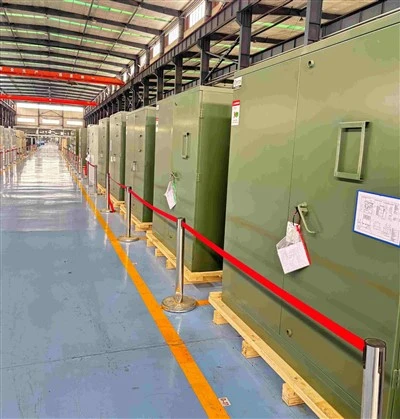
As someone who works directly with power operators and maintenance teams every day, I know that transformer problems don’t wait for 9-to-5. If you’re dealing with a persistent low oil alarm, or you’re looking to upgrade to a more reliable conservator that cuts down on false alarms and is easy to service, reach out to our team to discuss your needs. We build custom conservators for industrial, utility, and commercial applications, and we offer 24/7 technical support for anyone who buys our units—no automated phone lines, just real technicians who know conservators inside and out.
Power Transformer Oil Tank Reference
- American Society for Testing and Materials. Standard Specification for Mineral Insulating Oil Used in Electrical Apparatus, ASTM D3487.
- Occupational Safety and Health Administration. 29 CFR 1910.147, The Control of Hazardous Energy (Lockout/Tagout).
- Institute of Electrical and Electronics Engineers. IEEE Standard for Liquid-Immersed Transformer Maintenance, IEEE C57.104.
- National Electrical Manufacturers Association. Standard for Conservator-Type Transformers, NEMA SG-6.
Nantong Zhihe Electric Co., Ltd.
As one of the most professional oil conservator in transformer manufacturers and suppliers in China, we’re featured by quality products and low price. Please rest assured to wholesale cheap oil conservator in transformer made in China here from our factory. Customized orders are welcome.
Address: NO.202 Jianghai West Road, Hai’an Town, Hai’an City, Jiangsu Province
E-mail: chiaragao123@gmail.com
WebSite: https://www.ntzhelectric.com/
