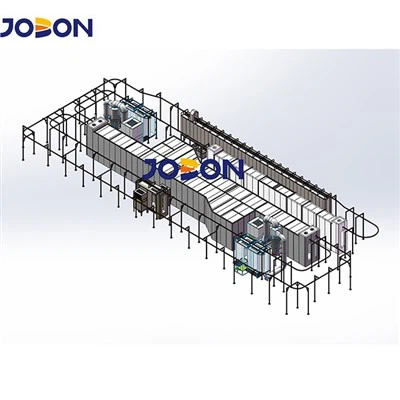
Hey there, I’m Mike—been running an electrostatic powder coating booth supply shop for 12 years, and let me tell you, the biggest headache I hear from every single one of my clients is powder waste. You spend thousands on high-quality powder, only to watch 15-30% of it blow out of your booth, get stuck in the overspray recovery system, or stick to random surfaces that aren’t your parts. That’s not just lost product—it’s wasted time, higher operational costs, and even compliance headaches if you’re dealing with hazardous powder materials. Today, I’m breaking down the science-backed, on-the-ground fixes I’ve tested with hundreds of workshop owners, all tailored specifically for electrostatic powder coating booths. No fluff, just stuff that actually works because I’ve seen it cut waste by up to 22% for regular clients. First, let’s get one thing straight: powder waste in electrostatic coating systems isn’t “just” messy overspray. It’s a physics problem first, a maintenance gap second, and a training issue third. Every part of your booth setup interacts to either trap that powder where it belongs or send it flying, so let’s walk through each lever you can pull. Start with the booth itself—specifically, how it’s sized and configured for your parts. I can’t tell you how many times a client comes to me with a 4-foot wide booth spraying small, 1-foot automotive trim pieces, and they’re wondering why powder is escaping through the exhaust. Overspray doesn’t just float randomly; it follows air currents. If your booth’s air flow rates are mismatched to your part size, you’re actively pulling powder out of the working zone. For parts under 2 feet in total surface area, I recommend a booth with a more restricted exhaust curtain—aim for 100-120 linear feet per minute (fpm) of cross-ventilation at the part entry/exit points, versus the 150-180 fpm most default booths are set to. That’s not a random number; electrostatic powder particles are 10-50 microns in size—small enough to stay suspended in air, but heavy enough that a cross-vent flow over 120 fpm will carry them right out of the booth instead of letting them fall into the recovery filters. I worked with a agricultural equipment shop last year that was wasting 28% of their powder on small mower deck parts just because their 5-year-old booth had never had its exhaust flow calibrated. We tweaked that setting, and they saw waste drop to 11% in the first month. Next, your gun setup is make-or-break. A lot of people think more voltage = better coverage, but that’s a myth that kills powder. Electrostatic attraction works by charging powder particles to a negative charge (the part is grounded positive, for those who want the physics deep dive), but if you push voltage above 80 kV, you get “corona back-ionization” — that’s when stray electrons jump from the gun tip back to the powder particles, making them repel each other instead of sticking to the part. Those repelled particles become part of the overspray, which is exactly the waste we’re talking about. For most ferrous and non-ferrous parts, stick to 60-75 kV, not higher. Another gun tweak: adjust the fan air pressure. If your fan is cranked up over 30 PSI, you’re not just atomizing powder—you’re blowing it like confetti, sending fine particles too fast to stick to curved or recessed parts, which then become overspray. I recommend 18-25 PSI for fine powder (most standard polyester powders fall here) and up to 28 PSI only for thicker, coarser powders used for textured finishes. One client that does custom metal furniture was using 35 PSI for their chair frames, and their overspray was ending up in their recovery system so often they had to clean their filters twice a week. We dropped the fan pressure to 22 PSI, and their filter cleaning frequency went to once every two weeks, plus they used 19% less powder on the same number of parts. Then there’s the recovery system—this is where you trap the overspray powder before it’s lost, but only if it’s maintained properly. A lot of shops ignore their cyclones or cartridge filters until they’re clogged, but a clogged filter doesn’t just reduce air flow (which messes up your booth’s airflow) — it also lets fine powder particles pass through and get pulled out the exhaust. For cartridge filters, you should be doing a “pulse clean” every 15 minutes during a production run, and a full manual deep clean once a week when you shut down for maintenance. Wait, what’s a pulse clean? It’s a short burst of compressed air that shakes the powder off the filter cartridges back into the hopper. I’ve seen clients skip pulse cleaning to save air, but that leads to a 30% drop in filter efficiency within 2 weeks, which translates to more lost powder. Another upgrade: add a powder reclaimer hopper with a sieve. Even if your filters catch 95% of overspray powder, small clumps of powder or debris can get in, so sieving reclaimed powder before you reuse it ensures you’re not feeding those clumps back into your guns, which cause uneven spraying and more waste. A construction parts shop I work with was throwing out 10 gallons of reclaimed powder a month because of clumps that clogged their guns. We added a sieve, and that waste disappeared immediately—plus, their gun downtime dropped by 12%. Now, let’s talk part preparation and grounding—something most new operators overlook, but it’s a huge driver of waste. If your parts aren’t properly grounded, the powder won’t stick, so it just floats away as overspray. For metal parts, make sure your hanging racks are clean and free of old powder buildup, rust, or grease—even a thin layer of old powder can insulate the rack, so when you hang a new part, it can’t ground properly. I always tell clients to sand their racks once a month and wipe them down with isopropyl alcohol before a new production run. For parts with complex geometries (like bolt holes or curved edges), use grounding clips on the back side or edges where you don’t care about finish—this gives the powder a place to stick that’s not a recess, so you don’t get overspray in those hard-to-reach areas. A automotive collision repair shop was wasting 21% of their powder on small bracket parts with recessed holes because they didn’t use grounding clips. We added the clips, and their powder use per job dropped by 18% in 6 weeks. Let’s get into the small, consistent habits that add up to big waste cuts. First, batch your parts instead of spraying single parts at a time. Running your booth with only one part in the working zone means you’re wasting air flow and powder on empty space. Batch 5-10 identical or similar parts together, and you’ll reduce overspray per part by 10-15% because the powder cloud is more concentrated, so more sticks instead of dispersing. Second, calibrate your powder feed rate. Most automatic feeders are set too high by default, spitting more powder than the part can actually hold. For manual guns, adjust the powder control knob so that the stream of powder is narrow enough to target the part, not a wide cloud. For automatic guns, match the feed rate to the part’s surface area—small parts need lower feed rates, large panels need higher. A metal fab shop was running their feeders at maximum for all parts, and they realized they were spraying double the powder they needed on small brackets once we calibrated the feed rate. Last, don’t mix powder types. If you have a batch of white powder left from a job, don’t mix it with black powder for a new run—even a small amount of pigment difference can cause uneven coverage, leading you to spray extra powder to fix the finish, or have to reject parts entirely. I recommend storing leftover powder in sealed, labeled buckets, and only using it for touch-ups or small runs of the same color within 30 days (before it starts to clump anyway). Now, let’s address a common myth: is it worth upgrading to a new booth to cut waste? For small shops, maybe not—most of the fixes I mentioned above work on existing booths, with no major investment. For high-volume shops (running 8+ hours a day, 5 days a week), upgrading to a modern electrostatic powder coating booth with integrated air flow controls, smart pulse cleaning, and gun voltage regulation can cut waste by another 15% or more, because those controls are automatic and consistent, unlike manual settings that can drift over time. I had a client that upgraded from a 10-year-old manual booth to our modular electrostatic powder coating booth, and their total powder waste dropped from 24% to 7% in the first 3 months, which saved them over $12,000 a year in powder costs—way more than the cost of the booth upgrade. The key here is that powder waste isn’t inevitable. It’s a series of small, fixable issues with your booth setup, gun settings, maintenance, and operator habits. Over my years in this business, I’ve seen shop owners cut their powder waste by more than half without buying new powder, without increasing labor time, just by tweaking the settings and habits they already have. If you’re dealing with powder waste that’s eating into your profits, don’t guess at fixes—reach out to our team to talk through your setup, your part types, and your current process. We’ll help you identify exactly where your waste is coming from and build a plan that works for your specific operation, no one-size-fits-all jargon. You don’t have to waste more money on powder or deal with the hassle of extra cleanup—let’s get your waste under control. Electrostatic Powder Coating Booth

PENTOO Brand Powder Coating Equipment PENTOO References
Powder Coating Technology: Reducing Overspray Waste, Industrial Finishing Association, 2021
Electrostatic Charge Dynamics in Powder Coating, Journal of Coatings Technology and Research, Vol. 18, No. 3, 2020
Booth Air Flow Calibration for Powder Coating, Metal Finishing Magazine, Vol. 119, No. 2, 2022
Cartridge Filter Maintenance Best Practices for Powder Recovery, Powder Coating Institute, 2023
Qingdao Jobon Science&Tech Development Co., Ltd.
Qingdao Jobon Science&Tech Development Co., Ltd. is one of the leading electrostatic powder coating booth manufacturers and suppliers in China. We warmly welcome you to buy high-grade electrostatic powder coating booth for sale here from our factory. All our products are with high quality and competitive price.
Address: 48, YANGZHOU ROAD, LAIXI EDZ, QINGDAO, CHINA
E-mail: Info@joboncoating.com
WebSite: https://www.joboncoating.com/
