Hey there, if you’ve ever been deep in a construction, HVAC, or even home renovation project, you’ve probably seen PVC insulation board hanging around—maybe you even used it without stopping to think, “Wait, how strong is this stuff, really?” As a PVC insulation board supplier, I get that question all the time, especially from contractors who’ve had a material fail mid-job and don’t want to deal with that headache again. Today, I’m breaking down the shear strength of PVC insulation board, keeping it real, no stuffy lab jargon that makes your eyes glaze over. PVC Insulation Board
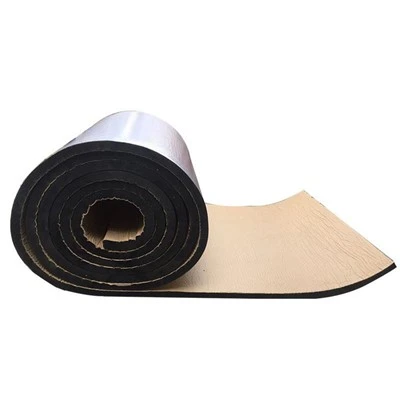
First off, let’s cut through the confusion—shear strength isn’t the same as that “break it with a hammer” strength we all think of. Shear is what happens when two forces pull (or push) in opposite directions along the same plane, like if you had two pieces of PVC board stacked and tried to slide them past each other sideways. Think of it like cutting a deck of cards: the force trying to slide the top card off the bottom one is shear. For PVC insulation board, this is way more relevant than you’d guess—we’re talking about walls that need to stay aligned, ductwork that doesn’t pull apart when pressurized, or even signs mounted to the board that get bent by wind.
Now, before I get into actual numbers, let’s talk about why that number isn’t a one-size-fits-all answer. PVC insulation board isn’t just “PVC”—it’s a mix of the base resin, stabilizers, plasticizers (for flexible grades), and flame retardants, depending on what it’s made for. The big split here is between rigid PVC (uPVC, unplasticized) and flexible PVC, and 99% of our insulation board is rigid because it needs structural oomph to hold its shape. Even within rigid PVC insulation board, shear strength can shift based on density, thickness, and how it’s cured during manufacturing. That’s why as a supplier, I always ask customers: what’s this board going to be doing? If you’re lining a freezer wall, that’s a different shear load than if you’re using it for a temporary event sign.
Let’s get to the good stuff, the actual shear strength numbers. For standard rigid PVC insulation board—think the stuff we stock in ½-inch, ¾-inch, and 1-inch thick sheets for general construction—you’re looking at a shear strength (specifically, tensile shear, which is the most common test for this material) between 4,000 and 8,000 psi (pounds per square inch) at room temperature. Wait, that’s psi? Yeah, that’s the standard unit for this kind of material test, and for context, a cheap wooden 2×4 has a tensile shear strength around 1,000 psi—so PVC is way sturdier than you might’ve guessed. If you go for higher-density PVC insulation board (we make a thick, dense grade for heavy industrial jobs), that number jumps up to 10,000 to 12,000 psi, easy.
But here’s the thing: that number only applies when everything is perfect—room temp, dry conditions, no UV exposure. Real-world work is messy, and shear strength takes a hit when conditions change. Let’s break down the big ones that matter for PVC insulation board.
Temperature is the biggest culprit. PVC hates extreme heat, even if it’s rated for it. If that board’s sitting in a attic that hits 120°F in the summer, shear strength can drop by 20-30% right off the bat. Go to 150°F, and you’re looking at a 50% drop—because the plastic starts to soften, so it can’t resist that side force as well. Cold? Actually, PVC holds up pretty well there—its shear strength might even bump a tiny bit in freezing temps, but only if it doesn’t get brittle (we add stabilizers to our boards so that doesn’t happen).
Moisture is another one. If your PVC insulation board is constantly wet—like in a marine application, or a bathroom that floods—water can seep into tiny gaps in the material and weaken the molecular bonds. That can take shear strength down 10-15% after prolonged exposure. And UV light? If you leave PVC insulation board uncoated outside for months, the sun breaks down the surface over time, making it brittle. After a year of outdoor exposure, shear strength can drop by up to 25%, so we always recommend a UV-resistant coating if it’s going to be outside long-term.
Now, let’s talk about how shear strength actually matters in real projects, because numbers mean nothing if you don’t know when to use them. A lot of HVAC contractors use PVC insulation board to line ductwork interiors or build custom duct runs. When you’re pressurizing a duct, the air pushes out on the walls, and if the seams between two PVC panels aren’t strong enough, that shear force can pull the seam apart. For standard residential ducts, our ½-inch PVC insulation board is more than enough—its shear strength is way higher than the 1,500 psi load residential ducts typically produce. But if you’re doing a commercial duct that runs 10 stories up? You might want to bump up to the ¾-inch high-density grade, because the pressure loads are way higher, and wind shear adds to that too.
Another big use case: wall insulation for commercial buildings, especially in places with heavy seismic activity. When an earthquake hits, walls shift and twist—any insulation board that’s part of the wall needs enough shear strength to hold its place, not crack or pull loose. Our standard PVC insulation board here has a shear strength that meets international building code requirements for seismic zones, so you don’t have to worry about it failing when the ground shakes. We’ve had a few contractors tell us they switched to our PVC insulation board from foam board because the foam would crack during minor tremors, and our stuff held up no problem.
Wait, I know what you’re thinking: “What about when I have to cut or drill the board? Does that affect shear strength?” Short answer: only if you do it wrong. If you drill a hole too close to the edge, that creates a stress point where shear force can concentrate and break the board. But if you follow standard guidelines (no holes within 2x the board’s thickness from the edge), you won’t see a meaningful drop in shear strength. And when it comes to cutting, PVC doesn’t splinter like wood, so the edges stay smooth, which actually helps with shear because there’s no uneven edge for force to catch on.
As a supplier, I see a lot of customers make the mistake of picking the cheapest PVC insulation board they can find, and that’s where shear strength can be a problem. Some cut-rate manufacturers use recycled PVC that’s full of impurities, or don’t cure the material properly, so their shear strength is way lower than what’s advertised. I had a guy reach out to me last year, panicking, because he’d used a cheap board for a walk-in cooler floor, and after a month, the panels were sliding apart. He told me the supplier said it had 6,000 psi shear strength, but when we tested a sample, it was only 3,500 psi—no wonder it failed. That’s why it’s important to work with a supplier that tests every batch, not just throws a number on a spec sheet.
Now, let’s talk about testing, because that’s how we back up those shear strength numbers. We don’t just guess—every batch of our PVC insulation board goes through ASTM D2344 testing, which is the standard test for apparent shear strength of rigid plastics. It’s a simple test: you clamp a small sample of board, push down on the center with a rod, and measure how much force it takes to make the sample shear along the plane. For our standard grade, that test gives us that 4,000 to 8,000 psi number I mentioned earlier, and the high-density grade hits 10,000 to 12,000 psi. We keep a log of every test result, so if a customer has a question, we can pull it up no problem.
Is there a time when PVC insulation board’s shear strength isn’t enough? Yeah, and that’s when you need to pick a different material. If you’re building a structure that has to hold extremely heavy side loads—like a temporary stage that’s going to have a ton of people leaning on it, or a bridge support—PVC probably isn’t your go-to, because even the highest shear strength is no match for steel or concrete. But for 90% of the insulation, construction, and signage jobs out there, PVC insulation board’s shear strength is more than up to the task.
Wait, one more thing I should mention: adhesive bonding. A lot of people don’t realize that the shear strength of PVC board isn’t just the material’s own strength—it’s also the strength of whatever you’re gluing it to. If you use a cheap adhesive that doesn’t bond well to PVC, your seam will fail before the board itself does. That’s why we always recommend industry-specific adhesives for our PVC insulation board—we even have a list of our go-to products that work best for different applications, because we’ve tested them ourselves. I’ve seen people use super glue, which sounds like a good idea, but it doesn’t hold up to shear force at all—super glue breaks apart like wet tissue under pressure.
So, to wrap this up, the shear strength of PVC insulation board isn’t a random number—it’s a function of the material’s makeup, density, thickness, and the conditions it’s going to be in. For most jobs, standard rigid PVC insulation board has a tensile shear strength of 4,000 to 8,000 psi, which is way more than enough for ductwork, wall insulation, and general construction, while high-density grades go even higher for heavier loads. Keep in mind that conditions like heat, moisture, and UV exposure will lower that number, so pick a grade that matches your project’s needs, and work with a reliable supplier that tests their product.
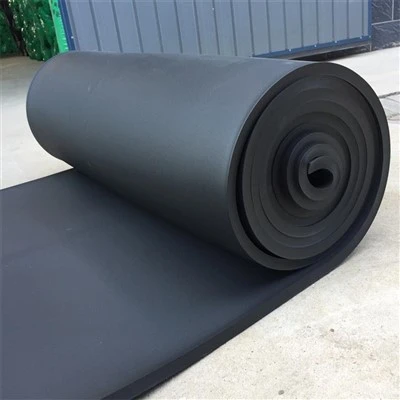
If you’re working on a project right now and need to figure out exactly what PVC insulation board grade is right for you, or want to test our product’s shear strength for yourself, hit us up—we’re here to answer all your questions, no sales pitch, just real info based on what we’ve seen over the years. No more guessing, no more cheap boards that fail mid-job. Just solid PVC insulation board that does what it’s supposed to.
Fireproof Board References
ASTM D2344 Standard Test Method for Apparent Shear Strength of Reinforced Plastics by the Short-Beam Method
Plastics Industry Association. (2021). Rigid PVC Insulation Board: Material Properties and Application Guidelines
National Building Code of Canada. (2022). Seismic Load Requirements for Building Envelope Materials
HVAC Contractors Association. (2020). Ductwork Material Performance Standards for Commercial and Residential Applications
Langfang Aolesi Thermal Insulation Materials Co., Ltd.
As one of the most professional pvc insulation board manufacturers and suppliers in China, we also support customized service. Please feel free to buy bulk high quality pvc insulation board made in China here from our factory. For pricelist, contact us now.
Address: Dongwang Village, Dacheng County, Langfang City, Hebei Province
E-mail: Lfaolesibaowen@outlook.com
WebSite: https://www.lfaolesi.com/
