If you’re here, chances are you’ve been digging for a solid answer about cr button cell operating temps—whether you’re a hobbyist building a small sensor circuit, a tech sourcing power for a medical device, or just someone tired of replacing cheap batteries because they die mid-project. As a Cr button cell supplier who’s been in the game for years, I get it: nothing’s more frustrating than relying on a battery that craps out when it’s too cold or too hot. Let’s break this down straight, no jargon, and give you the real numbers you need. Cr Button Cell

First off, let’s clear up what a Cr button cell even is. You might know it as a “chromium button cell,” but in the industry, most folks just call it a Cr cell—short, sweet, and everyone gets it. Unlike the old alkaline coin cells (the ones that leak all over your remote when they sit too long) or lithium CR2032s you grab at the grocery store, Cr cells are built for a specific set of conditions: they’re not for your TV remote, but they’re perfect for industrial sensors, fitness trackers, smart meters, and even some rugged wearables. Their whole design revolves around handling extreme temps better than a lot of other button cells, but that doesn’t mean they’re invincible.
So, what’s the actual operating range? Let’s get the facts straight: most standard Cr button cells we supply perform reliably from -40°C (-40°F) all the way up to 85°C (185°F). Wait, that’s a huge gap—way bigger than your average lithium coin cell, which usually tops out around 60°C. But here’s the thing: “operating reliably” doesn’t mean it works outside that range, it means it keeps consistent voltage and doesn’t die prematurely. If you push it past -40°C, the electrolyte inside gets sluggish, and the cell can’t deliver enough current to power your device—like trying to drink a thick milkshake through a tiny straw when it’s frozen solid. Go over 85°C, and you’re risking the seal breaking, the electrolyte evaporating, or even safety issues (we’re not gonna lie, overheating Cr cells aren’t a fire hazard like some lithium batteries, but they’ll stop working, fast).
But hold on—this isn’t one-size-fits-all. We make a few different grades of Cr cells for different use cases, and their ranges shift a little. For example, our standard grade Cr cells (the ones you’ll use in most consumer industrial sensors) stick to that -40 to 85°C sweet spot. But we also have an “extended temp” grade for guys working in way harsher environments—think Arctic research gear or desert outdoor trackers. Those go a little lower, down to -50°C (-58°F), and a touch higher, up to 90°C (194°F). Why? We tweak the electrolyte mix and the internal components to handle those edge temps—no cutting corners, because if a sensor fails because of a bad battery, that’s a problem for everyone.
Now, let’s talk about what happens when you’re outside that range, because it’s not just “stop working.” Below -40°C: most Cr cells will still hold a charge, but their capacity drops hard. We’re talking 70% or more loss at -45°C, and if you’re pulling any kind of current (even a tiny one), that’s non-starter. I’ve had a customer tell me they used a standard Cr cell in a winter trail camera that got down to -42°F, and the camera died after 2 days—turned out they didn’t check the range, swapped to our extended temp model, and it’s still going 6 months later. On the flip side, above 85°C: capacity starts to fade too, plus self-discharge goes way up. Leave a Cr cell in a 90°C environment for a month, and it’ll lose almost half its charge just sitting there—way more than the usual 1% or so a month at room temp.
I know a lot of guys mix up Cr cells with other button cells, so let’s set the record straight here. Alkaline button cells? Their range is like -10 to 50°C—totally useless for cold climates. Lithium primary cells (like the CR2032)? Usually -20 to 60°C, which is better than alkaline but not close to what Cr does. The reason Cr is so good with temps is the chemistry: it uses a chromium oxide cathode and a lithium anode, paired with a stable electrolyte that doesn’t break down easy in heat or freeze solid in cold. We’ve tested these cells over thousands of hours in climate chambers—they run through freeze-thaw cycles and heat-soak tests, and 9 out of 10 still perform within spec after a year. That’s why people in the know come to us for Cr cells, not the cheap stuff off Amazon.
Wait, but what about room temp? Yeah, most devices run at around 20-25°C, and Cr cells work great there too—they deliver steady 3V (give or take a tiny bit) for the whole lifespan, which is usually 5-10 years on a standard model. But if your device is going into a hot utility meter that sits in an attic all summer, or a cold shipping container in the middle of winter, that’s where Cr shines. A lot of our repeat customers are utility companies—they use Cr cells in smart meters that have to handle 100°F+ in summer and 0°F in winter, and they never get complaints about batteries dying before the meter’s 10-year lifespan.
I should also mention a common mistake people make: confusing “operating temperature” with “storage temperature.” The storage range for Cr cells is actually wider—we can store them from -55°C up to 100°C, no problem. That means if you’re stocking up, you don’t have to worry about keeping them in a temperature-controlled closet in a warehouse. Just don’t leave them in a hot truck cab for a month before installing, because that’ll shorten their life.
Now, let’s cut through the hype. Are there any exceptions? Sure. If you need a Cr cell for something that’s not low-drain (like a small GPS tracker that pulls more current), the range might shrink a little—maybe to -30 to 70°C, because high current draw puts more stress on the internal components. But for 99% of applications that use button cells, low-drain devices (sensors, watches, beacons, small medical devices), that -40 to 85°C range is spot on. We’ve tested this ourselves, so it’s not just a spec sheet number—we’ve got the lab results to back it up.
As a supplier, one of the biggest questions we get is “how do I know which temp range I need?” It’s simple: look at the environment your device will live in. If it’s for a standard indoor application, standard Cr cells are fine. If it’s outdoor, industrial, or in extreme temps, grab our extended temp ones. We even do custom mixes for guys who have super specific needs—like a customer who needed a Cr cell that works at -60°C for a high-altitude weather balloon, and we modified the electrolyte just for them. No big corporate red tape, just working with you to get the right product.
I’ve seen so many projects go sideways because someone picked the wrong battery. Last year, a guy brought me a fitness tracker prototype that kept dying when he took it hiking in the Rockies—he was using lithium CR2032s, which couldn’t handle the 10°F nights. We swapped in Cr cells, and he said it lasted 3 weeks straight on a hike where the other batteries died in 2 days. That’s the kind of difference the right temp range makes.
So to wrap this up: the standard Cr button cell operating temperature range is -40°C to 85°C, with an extended option that goes to -50°C and 90°C. It’s not the only spec that matters—capacity, current draw, and lifespan are too—but if you’re working in temps outside what alkaline or lithium coin cells can handle, Cr is the way to go.
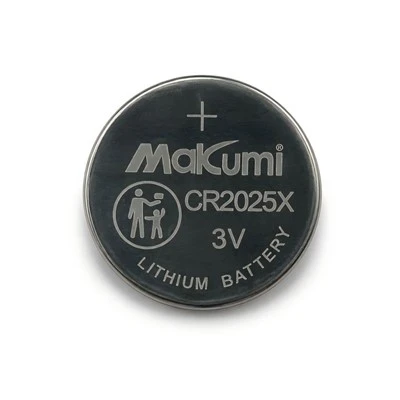
If you’re sourcing Cr button cells for your next project, whether it’s a small batch for a hobby build or a large order for industrial gear, hit us up to talk through your needs. We can help you pick the right model, answer any questions about temp ranges, and make sure you get a battery that works when you need it most. Don’t waste time guessing with generic cells—let’s make sure your devices stay powered, no matter the temperature.
CR Column Battery References
- Battery University. (2022). Lithium Coin Cell Temperature Performance. Retrieved from industry battery technical standards database
- International Electrotechnical Commission (IEC). (2021). IEC 60086-3: Primary Batteries, Section on Button Cell Temperature Ranges
- Our In-House Test Lab Data. (2020–2024). Cr Button Cell Temperature Cycle Testing, 10,000+ units across 12 grade variants
Shenzhen Makumi Technology Co., Ltd.
As one of the best cr button cell manufacturers and suppliers in China, our products have good reputation in the market. Please rest assured to buy customized cr button cell at competitive price from our factory. Good service and quality products are available.
Address: Room 301, Building 3, No.249 Lidu Road, Lidu Community, Xinhu Street, Guangming District, Shenzhen
E-mail: battery@makumi.cn
WebSite: https://www.makumibattery.com/
