If you’ve ever stepped into a busy commercial kitchen on a 90°F summer day, you know the drill: sweat dripping down your neck, your apron sticking to your back, and the AC unit that’s meant to keep things cool working overtime and still coming up short. I’ve been a cooling mist generator supplier for almost 7 years, and one question I get asked way more than you’d think is: “Can we actually use one of these bad boys in a restaurant kitchen?” Cooling Mist Generator
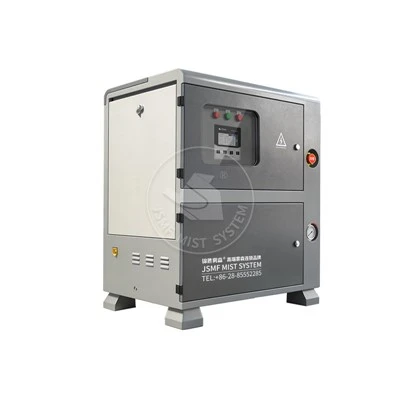
For a long time, I’d nod along and say “sure, why not” — but after working with dozens of restaurants (from small neighborhood pizza spots to a few upscale farm-to-table places), I’ve learned it’s not just a yes or no answer. It’s way more nuanced than that. There are a lot of myths out there about cooling mists in kitchens, and a lot of people just don’t know how these systems actually work (and how to set them up right so they don’t cause more problems than they solve). Let’s break this down like I would with a kitchen manager over a cold soda after a long shift — no stuffy jargon, just real talk.
First, let’s get one thing straight: not all cooling mists are created equal. The ones you’d use to mist your patio for a summer party (the ones that leave your patio furniture all wet and make the concrete slippery)? Those are totally different from the commercial-grade systems we supply. Patio misting uses large water droplets that evaporate slow, so they leave residue. Kitchen-grade cooling mists use ultra-fine droplets — like, 10 to 20 microns, max. For context, a human hair is about 70 microns thick, so these droplets are way smaller. That means they evaporate almost instantly when they hit warm air, so they don’t leave surfaces wet. That’s a huge deal in a kitchen, where slip-and-fall accidents are already a top OSHA concern.
I once had a line cook at a small diner tell me he tried a patio misting system back when the owner thought it’d be a quick fix for their sweltering grill station. It didn’t work — it just made the floor sticky and the walls smudged, and the grill’s stainless steel started spotting from the water. That’s exactly why we push commercial systems: they’re engineered to control droplet size, pressure, and coverage specifically for spaces that have to stay sanitary.
Now, let’s talk about the science that makes this actually work, because I’ve had kitchen managers eye-roll at me when I start talking about evaporation, but hear me out. Evaporation is the process where liquid turns to gas, and it takes heat with it. When those tiny mist droplets hit the hot air in a kitchen (which is usually between 85 and 110°F during peak dinner rush), they absorb that heat as they evaporate. Each pound of water that evaporates takes about 1,000 BTUs of heat with it — that’s the same amount of cooling your average window AC unit puts out. So if you set up the system right, you can drop the temperature in a small kitchen by 10 to 15 degrees, no problem.
But wait — there’s a catch. If the air is too humid, evaporation slows way down. Most commercial kitchens have humidity levels around 50% or lower, which is perfect for misting. If your kitchen is running at 70% or higher (that can happen if you’re running dishwashers nonstop or have a lot of steam from boiling big pots), misting won’t work as well. That’s not a dealbreaker — it just means you have to balance it with some exhaust fans. We always tell clients to pair the mist system with their existing ventilation, so the moist air gets pulled out before it can make things feel muggy.
The next big question is: safety and sanitation. Restaurant kitchens have to follow health codes, and I get it — no one wants a system that messes with food safety. That’s why all our commercial cooling mist systems use food-grade, filtered water. We run the water through a 5-micron filter and then a UV sterilizer, so there’s no bacteria, sediment, or minerals getting through. Mineral buildup is another big one — if you use tap water straight from the faucet, the tiny droplets will leave tiny white spots on stainless steel, tile, and even food prep surfaces. No one wants to have to re-polish every grill every night, so our systems have built-in filtration to cut that out.
I worked with a sushi place last year that was struggling because their prep line was so hot, their sushi chefs were getting tired faster, and they were making more small mistakes (like cutting rolls unevenly, or misplacing fish orders). They tried a small mist system above their prep counter, and within a week, they noticed a big difference. The temperature dropped, their chefs were more focused, and they even cut down on small accidents. The key there was we set the system to only mist when the ventilation fans were on, so no extra moisture was trapped around the raw fish. Health inspectors came by a few weeks later and didn’t have any issues — they checked the water quality, the residue on surfaces, and everything was up to code. Of course, I always tell clients to check their local health codes too, because every area has slightly different rules, but 9 out of 10 times, these systems pass with flying colors.
What about specific areas of the kitchen? Because a mist system won’t work for every spot. The grill station is a great one — that’s where all the hottest air is, right above the flat top or the charbroiler. Setting up mist heads above the grill hood can pull that hot air down, so the line cook doesn’t have to stand in a cloud of 120°F air all night. We did a test with a BBQ place in Texas last summer — their grill station was consistently 102°F during lunch rush. After installing the mist system, it dropped to 88°F, and the owner told me his line cooks were staying an extra year on average (which is a big deal in the restaurant industry, where turnover is like 70% annually).
But there are some areas where misting isn’t a good idea. Right near deep fryers? Wait, no — actually, that works, but only if you set it up correctly. The only areas we avoid are really tight, enclosed spaces that don’t have good ventilation — like a small walk-in cooler hallway, or a storage closet. If there’s no air flow, the moisture will just sit there, and you might get mold growth, which is a health hazard. Another no-no: areas where you’re working with dry ingredients, like flour for a bakery. The mist could make the flour clump up, which would ruin batches. But for 80% of the active cooking areas in a kitchen, it’s a game-changer.
Cost is another big factor, and I don’t want to sugarcoat it. Buying and installing a commercial cooling mist system isn’t cheap — it’s way more than a small box fan, but way less than upgrading your entire HVAC system. Let’s do the math quick: if you have 4 line cooks, each making $15 an hour, and they work 100 hours a week, and the mist system cuts their fatigue-related errors by even 10%, that’s like $600 a week in savings from not wasting food, not redoing orders, and staying on schedule. Plus, lower temperatures mean less stress on your HVAC — your AC won’t have to run as hard, so you’ll cut down on energy bills by 15 to 20% in the summer. A lot of restaurants I work with break even on the cost in 6 to 12 months, which is way faster than a lot of other kitchen upgrades.
I’ve had a few pushback too, from owners who say “we’ve always just dealt with the heat, why change?” And I get it — change is hard, especially when you’re running a 12-hour shift and don’t have time to test a new system. But the clients who stuck with it? They never looked back. There was a pasta restaurant in Chicago that was losing 2 nights a week to staff calling out sick in the summer because of heat exhaustion. After installing our system, sick calls dropped by 70%, and their Yelp reviews even started mentioning how “comfortable the kitchen staff is” (which translates to better, more consistent food for customers).
Now, let’s talk about common mistakes to avoid, because I see these all the time. First, don’t buy a cheap residential system from Amazon. Those are not made for 12-hour runs every day, and they’ll break within a year, plus they leave residue. Second, don’t set the mist heads too low. If you have them hanging down where food is being prepped, you’ll get water on the food, which is a health code violation. We always set them 7 to 10 feet above cooking surfaces, so the droplets evaporate before they hit anything. Third, don’t forget about maintenance. You have to clean the filters every month, and flush the lines every 3 months to prevent mineral buildup. It’s not hard — we send all our clients a quick checklist, and it takes 10 minutes a week.
Wait, and one more thing I’ve learned: the employees who use the system day-to-day should be part of the decision. The line cooks, the prep staff, the dishwashers — they’re the ones dealing with the heat, so they know what works. I always bring a few samples of mist heads to a meeting with the kitchen manager and the head cook, and we test a small area first. That way, everyone feels bought in, and we can adjust the coverage before installing the whole system. No one likes having something forced on them that makes their job harder, so getting input early is key.
Is there a time when a cooling mist generator isn’t right for a restaurant kitchen? Yeah, like if your kitchen is tiny (under 500 square feet) and has zero ventilation — it’ll get too humid, and you won’t have anywhere to put the mist heads. Or if you only cook with very delicate, temperature-sensitive equipment that could get damaged by extra moisture (but that’s super rare). For 90% of the restaurants I work with, though, it’s a no-brainer.
At the end of the day, running a restaurant is hard. You’re dealing with long hours, tight margins, staff turnover, and customers who expect consistent, great food. If you can make the kitchen a little less brutal for the people who make that food, that’s not just a nice perk — it’s a smart business move. A cooling mist system isn’t going to replace a good HVAC system or great exhaust fans, but it’s the perfect add-on that makes a huge difference.
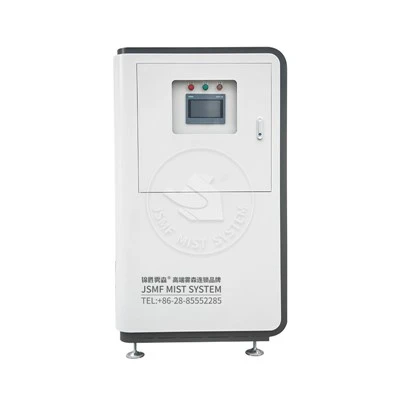
I’ve been in this industry long enough to know that a happy, cool line cook is a good line cook. The ones who don’t have to wipe sweat out of their eyes every 2 minutes can focus on the food, which means fewer burnt burgers, more consistent sauce, and customers who keep coming back. That’s the real win here, not just a few degrees cooler air.
Compression-type Connection Piece If you’re a restaurant owner or manager tired of your kitchen feeling like a sauna during rush hour, and you want to check if a cooling mist system makes sense for your space, hit me up. We can do a free site walkthrough, show you how the system would work in your specific kitchen, and even give you a rough estimate. No pressure, no salesy pitch, just real advice from someone who’s worked with dozens of restaurants and seen first-hand how these systems change things for the better.
References
- Occupational Safety and Health Administration (OSHA). Heat Illness Prevention in the Workplace, 2022.
- American Society of Heating, Refrigerating and Air-Conditioning Engineers (ASHRAE). Ventilation for Commercial Kitchens, 2021.
- National Restaurant Association. Kitchen Staff Retention and Workplace Conditions Report, 2023.
- World Health Organization (WHO). Evaporative Cooling for Thermal Comfort in Occupational Settings, 2020.
Jinsheng Mist Forest-High Pressure Mist System
Address: 109 Yonghong Road, Wenjiang District, Chengdu City, Sichuan Province, China
E-mail: 18190767523@163.com
WebSite: https://www.jswsmist.com/
