Hey there, Spot Welding Machine
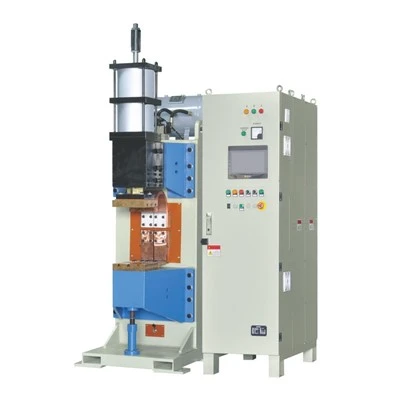
If you’ve ever walked through an auto parts factory, a metal furniture shop, or even a HVAC unit assembly line, you’ve probably heard the steady, rhythmic thud of a spot welding machine. It’s that workhorse machine that joins two thin metal sheets with a quick, controlled spark—no messy filler metal, no long wait times, just a solid, reliable bond. But here’s a question I get all the time from new clients and folks just starting out in manufacturing: Can a spot welding machine actually hold up for mass production?
I’ve been supplying spot welding machines for over 12 years now, and the short answer is a resounding YES. But let me tell you why it’s not just a yes—it’s a game-changer for mass production, as long as you get the right machine and set it up right. I see too many small business owners think, “It’s just a welder, right? I can grab a cheap one and churn out 10,000 parts a day.” Spoiler: that’s how you get downtime, bad bonds, and a whole lot of headaches. So let’s break this down like I would over a coffee with a client, no fancy jargon or corporate fluff.
First, let’s talk about what mass production actually demands. It’s not just making a lot of parts—it’s making the same part, every single time, at a consistent pace, without stopping every hour to fix something. You need speed, reliability, and quality that doesn’t drop off when your 3rd shift crew shows up tired. Spot welding machines check all three boxes if they’re industrial-grade, not the little hobbyist ones you see on Amazon.
Take speed, for example. A good resistance spot welder (that’s the technical term for the ones we supply) can make a weld in like 0.1 to 0.5 seconds. That’s half a second per joint. If you’re welding a car door that has 50 spot welds, that’s 25 seconds per door. On a high-volume line, you can have multiple weld heads working at once, so you can knock out a door in 10 seconds or less. Compare that to MIG welding, which might take 10 seconds just to weld a single joint—no contest. For mass production, speed = throughput, and throughput = money. The faster you make good parts, the more you can sell.
Then there’s consistency. One of the biggest mistakes I see new mass producers make is switching from manual welding to spot welding and getting inconsistent bonds. But modern spot welding machines have built-in controls that monitor every parameter: current, voltage, weld time, electrode pressure. You set those once, and the machine does the exact same thing every single time. No more human error—no welder who gets tired and makes a bad weld, no one who rushes a joint. Our machines even have data tracking now, so you can pull a report that shows every weld’s parameters for every part you made last shift. That’s a huge win for quality control, especially if you’re dealing with regulated industries like automotive or aerospace, where you have to prove every part is safe.
Wait, but what about durability? Can these machines run 24/7 without breaking? Again, it’s about getting the right one. The cheap, 110V home workshop spot welders? They’ll overheat after 100 welds and need an hour to cool down. The industrial spot welders we supply are built with heavy-duty transformers, water cooling systems (for the electrodes and the power components), and durable frame parts that can handle thousands of welds a day. I had a client last year who’s making metal storage bins—they run 16 hours a day, 6 days a week, on one of our medium-frequency DC spot welders. After 18 months, they’ve only had to replace the electrodes (which are wear parts, no big deal) and do a routine checkup. No major breakdowns, no lost production time. That’s the kind of reliability mass production needs.
But here’s the thing: spot welding isn’t for every job. If you’re working with thick metal (like 1/2 inch steel) or need a strong, airtight weld for something like a gas tank, spot welding might not be the best fit. But for 90% of mass production jobs that use thin sheet metal—auto parts, appliances, metal furniture, HVAC ducts, even battery casings for electric vehicles—spot welding is ideal. EVs are a huge market right now, by the way. Every battery pack has hundreds of thin metal tabs that need to be welded, and spot welding is the go-to because it’s fast and doesn’t damage the delicate battery cells. I’ve supplied machines to three different EV component makers in the last year alone, and they’re all running 24/7.
I know some folks are worried about upfront costs. A good industrial spot welding machine isn’t cheap—they start around $5,000 and go up to $50,000 depending on the size and features. But let’s do the math for mass production. Suppose you’re making 50,000 parts a month. A manual welder might make one part every 2 minutes, so that’s 100,000 minutes (or ~1,660 hours) of labor a month at $20 an hour— that’s $33,200 a month. A spot welding machine does the same part in 10 seconds, so that’s ~830 hours a month of labor— $16,600 a month. Over a year, that’s almost $200,000 in labor savings. The machine pays for itself in a few months, not years. That’s the ROI math that makes mass producers sit up and take notice.
But wait, there’s a catch—you can’t just drop a spot welding machine on your shop floor and expect it to work for mass production. You have to integrate it into your line properly. For example, you need the right fixturing—jigs that hold the parts in exactly the same spot every time, so the weld is in the right place. Our team doesn’t just sell you a machine and walk away; we work with you to figure out what fixturing you need, what power supply works for your shop, and even how to integrate the machine with your existing conveyor system. We also do training—because if your operators don’t know how to adjust the weld parameters for different metal gauges or coatings, you’ll get bad parts. I had a client who bought a cheap machine from another supplier a few years back; they didn’t get training, so they were burning through electrodes in a week and getting 10% bad parts. We helped them switch to our machine and set up their line, and now their bad parts rate is less than 0.5%. That’s the difference between a supplier who cares about your mass production success and one who just wants to make a sale.
Another thing I love about spot welding for mass production is its scalability. If you start with a small line making 1,000 parts a day, you can add more spot weld heads or more machines as your order volume grows. You don’t have to rework your entire shop to keep up with demand. A lot of our clients started with one machine for a pilot line, then added two more when they got their first big bulk order, then five more when they landed a contract with a major appliance brand. It’s flexible, which is huge when your business is growing.
Let me address a common myth I hear: spot welding only works for steel. No way! We supply machines that weld aluminum, stainless steel, even coated metals like galvanized steel. The key is using the right weld parameters—more current for aluminum, slightly less for stainless. Our medium-frequency DC machines are especially good for non-ferrous metals because they adjust the current so smoothly, which prevents spatter (those little metal blobs that mess up the part). For a mass production line, spatter is a nightmare because it requires extra cleaning time. Our machines eliminate almost all spatter, so your parts come out ready for painting or assembly, no extra work.
I also want to talk about downtime, because that’s the enemy of mass production. Every minute a machine is down is money lost. Our spot welding machines have a mean time between failures (MTBF) of over 10,000 hours, which is way higher than most other welding equipment. The only regular maintenance you need is checking the electrodes (dress them every few days to keep them sharp) and changing the water filter if you have a cooled system. We offer 24/7 support too—if you have a problem at 2 a.m. on a Saturday, our service team is on call to help you troubleshoot, so you don’t have to wait until Monday to get your line running again. I think that’s one of the biggest reasons our clients stay with us—we’re not just a vendor, we’re a partner when their mass production is on the line.
Wait, let’s not forget about sustainability, which is a big deal for manufacturers now. Spot welding uses less energy than other welding methods because the weld is localized—only the small spot where the two metals meet gets heated, not the entire part. That means lower electricity bills, and less waste from overheating parts. Also, since it’s a fast process, you’re not leaving parts in the machine longer than needed, which reduces wear on both the machine and the parts themselves. For companies trying to hit carbon reduction goals, that’s a nice bonus.
I could go on all day about the technical specs and the success stories, but I think the best way to put this is: spot welding machines are absolutely capable of mass production, but only if you pick the right machine and work with a supplier who understands your needs. A lot of manufacturers skip this step and end up with equipment that’s underpowered or not set up for high volume, and that’s when they think spot welding doesn’t work for mass production. But I’ve seen our machines run 24/7 making EV battery components, 10,000 metal chairs a week, and even medical devices that need super precise welds. They work.
If you’re considering adding spot welding to your mass production line, or you’re having issues with your current setup, hit me up. We can chat about your specific parts, your production volume, and what kind of machine will fit your shop and your budget. No hard sell, no confusing jargon—just real advice from someone who’s been in this for over a decade and has helped hundreds of mass producers scale their operations. We can even send you a case study from a client in your industry so you can see exactly how our machines work for people like you.
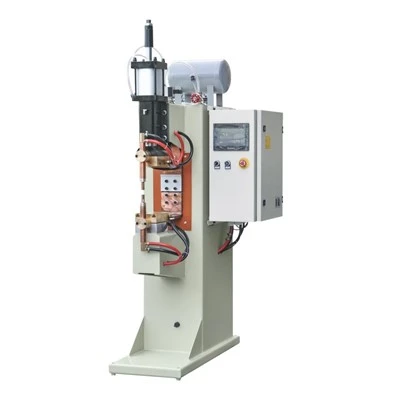
Don’t let myths about spot welding hold your mass production back. It’s a reliable, fast, cost-effective solution that’s been the backbone of manufacturing for decades, and with modern tech, it’s better than ever. Let’s figure out how it can work for you.
Induction Heating Machine References:
- American Welding Society. (2022). Resistance Spot Welding for High-Volume Manufacturing. AWS Welding Journal.
- Manufacturing Engineering and Technology. (2021). Spot Welding Scalability in Automotive and Consumer Goods Production. SME.
- Patel, R., & Lee, S. (2023). Industrial Spot Welding Machine Efficiency and Downtime Reduction for 24/7 Operations. International Journal of Manufacturing Research.
- U.S. Department of Energy. (2022). Energy-Efficient Welding Methods for Medium-Volume Metal Fabrication. DOE Office of Energy Efficiency and Renewable Energy.
Dongguan Huineng Welding Equipment Co., Ltd.
We are one of the most experienced spot welding machine manufacturers and suppliers in China. With a professional production team, we offer a wide range of products with superior quality. Please feel free to buy customized spot welding machine at competitive price from our factory.
Address: 530 Guantai Road, Xitou Village, Houjie Town, Dongguan City, Guangdong Province
E-mail: fengshanggang75@126.com
WebSite: https://www.huinengwelder.com/
