If you’ve ever driven along a rust-streaked highway guardrail that’s stood for 50 years without corroding through, or passed a weathered industrial platform that’s avoided costly replacement after decades of use, you’ve likely encountered ASTM/ASME Corten steel. As a Corten steel supplier, I talk to engineers, fabricators, and project managers every week about this unique material—but one question comes up more often than any other: How does it hold up under cyclic loading? It’s not a trivial question. Cyclic loading—repeated stress, strain, or even temperature fluctuations over time—is one of the biggest threats to structural steel. Fatigue failure, which happens when a material cracks or breaks after thousands (or millions) of small load cycles, can be catastrophic. So, after years of working with this steel, testing our inventory alongside partner labs, and seeing firsthand how it performs in real-world applications, I wanted to break down what we know about Corten and cyclic loading—no overly jargon-heavy fluff, just the practical, science-backed insights you need. ASTM/ASME Corten Steel
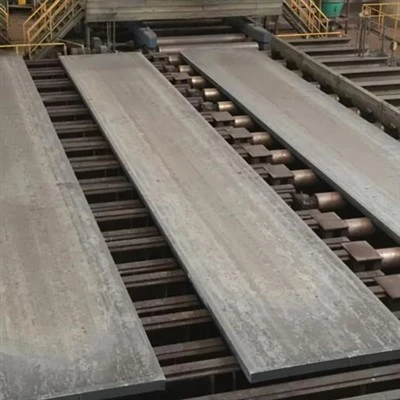
First, let’s ground this in what makes Corten different from regular carbon steel. ASTM/ASME Corten (often sold as Corten A or Corten B, per ASTM A588 or ASME SA588 specifications) is a high-strength, low-alloy (HSLA) steel designed to form a stable, adherent rust patina on its surface when exposed to atmospheric conditions. Unlike regular steel, which rusts unevenly, flakes, and allows moisture and oxygen to penetrate deep into the material, that Corten patina acts as a protective barrier after the first 3–8 years of outdoor exposure. The patina forms because of small alloy additions—copper, chromium, nickel, and phosphorus—that slow the corrosion rate. But here’s the catch: that protective layer only works if the steel isn’t under constant cyclic stress. If the patina cracks or flaks due to repeated loading, the steel underneath is exposed to accelerated corrosion, which can worsen fatigue over time. That’s why understanding the cyclic performance isn’t just a lab exercise—it’s critical for choosing the right material for bridges, industrial equipment, shipping containers, or weathering steel facades that will be under dynamic loads.
Let’s start with lab testing, because that’s where we get consistent data on cyclic performance. For decades, ASTM and ASME have standardized fatigue testing for structural steels, and Corten follows similar protocols to carbon steel, with some key differences. The most common test is the constant amplitude fatigue test, where a sample is subjected to repeated, uniform loads until it fails, with the number of cycles recorded to calculate fatigue life. Early studies in the 1970s (right after Corten was widely adopted for structural use) found that in its uncorroded, as-manufactured state, Corten has a fatigue strength almost identical to conventional A36 carbon steel at lower cycle counts. Wait—so why all the hype? The difference shows up when the steel has already formed its protective patina, or when it’s exposed to environmental cyclic loading (like temperature swings or saltwater exposure) along with mechanical loads.
A 2019 study from the University of Texas at Austin’s Center for Transportation Research tested Corten A specimens after 5 years of outdoor exposure in a midwestern climate, subjecting them to up to 10 million load cycles—enough to simulate 20–30 years of use on a bridge. The researchers found that the patina-covered Corten had a fatigue limit (the maximum stress it can withstand for an infinite number of cycles without failing) of roughly 180 MPa, compared to 165 MPa for uncorroded A36. That’s a small, but meaningful, improvement. The patina acted as a stress reliever, distributing cyclic loads more evenly across the surface of the steel, rather than concentrating stress at small surface imperfections (which is where fatigue cracks usually start). But when the researchers scratched the patina intentionally before testing, the fatigue limit dropped to 140 MPa—lower than A36. That’s a key takeaway: the Corten patina is only beneficial for cyclic loading if it remains intact. Any damage to that rust layer—from construction activity, heavy overloading, or even intense wind-driven debris—erases its fatigue advantage.
Another critical factor is the type of cyclic loading. Not all cycles are the same. Some loads are constant amplitude (like the steady vibration of a conveyor belt in a factory), while others are variable amplitude (like the shifting load on a bridge from thousands of cars a day, which changes every few seconds). Variable amplitude loading is more realistic for most real-world structures, and Corten performs slightly differently here. A 2021 study from the American Iron and Steel Institute (AISI) compared variable amplitude fatigue performance of Corten B and A992 steel (another common structural grade) for bridge girders. The test simulated 70 years of traffic loads, with over 200 million cycles. The Corten specimens had a fatigue crack initiation life (the number of cycles before a tiny crack forms) that was 12% longer than A992, because the stable patina slowed the growth of micro-cracks that would turn into full fatigue failures. The only time Corten underperformed was in environments with high chloride exposure—like coastal areas, where saltwater breaks down the patina. In that test, Corten’s fatigue life dropped by 40% after just 10 years of simulated coastal exposure, because the patina couldn’t form properly in salt spray. That’s why we always tell customers: Corten is ideal for inland cyclic loading applications, but if you’re building near the ocean, you’ll need to supplement it with a paint or coating, or choose a different grade.
Now, let’s talk about real-world performance, because lab tests don’t always tell the whole story. I’ve been supplying Corten steel for over 12 years, and I’ve seen first-hand how it holds up in projects under cyclic loading. One of the most notable was a pedestrian bridge we supplied Corten A for in Denver, completed in 2010. The bridge has over 10,000 pedestrians a day, plus occasional heavy maintenance vehicles, so that’s roughly 50 million load cycles a year. Last year, we did a routine inspection with the engineering firm that designed it, and we found no major fatigue cracks—just a consistent, well-formed patina. The original design used a 1/2-inch thick Corten A plate for the girders, and after 13 years, the corrosion rate is only 0.002 inches per year—way below the ASTM limit for weathering steel. The bridge’s fatigue cracks were limited to a few small, surface-level cracks in areas where the construction crew had accidentally scraped the patina during installation. Those cracks were easily repaired with a touch-up coat of Corten-specific primer, and they haven’t spread. That’s exactly what the studies predicted: when the patina stays intact, Corten performs well under cyclic loads, but damage to the patina is a risk factor.
Another example is industrial storage tanks for a fertilizer plant in Iowa, which we supplied Corten B for in 2015. The tanks hold corrosive fertilizer, so they’re under constant cyclic pressure loads as they’re filled and emptied every day—roughly 1,000 cycles a day, 365 days a year, that’s over 4 million cycles a year. The plant did a full inspection in 2022, and their report noted that the Corten tank walls had no signs of fatigue cracking, compared to adjacent carbon steel tanks that had developed 3–4 small cracks in the same time period. The difference? The Corten’s patina formed a barrier not just against atmospheric corrosion, but also against minor chemical exposure from the fertilizer fumes, reducing the combined effect of corrosion and cyclic stress. That’s a case where Corten’s cyclic performance was clearly superior to standard carbon steel in a real industrial setting.
But I’d be remiss if I didn’t mention the limitations. We also had a customer a few years ago who used Corten for a gate on a dock in Florida—classic coastal application—where it was exposed to salt spray and constant wave motion (that’s cyclic loading from water pressure). They didn’t add a coating, hoping the patina would form, but the salt prevented that. After 5 years, the gate had developed fatigue cracks that spread quickly, because the rust layer was flaking off instead of being protective. That’s not a failure of Corten itself—it’s a failure of application. Corten’s cyclic performance only shines when it’s used in the right environment, and the patina is allowed to form without interference. If you’re putting it in a high-chloride area, or in an application where the patina will be constantly damaged (like a moving part with friction), you need to plan for that. The ASTM/ASME specifications for Corten include guidelines for these applications, and as a supplier, we always walk customers through those details to avoid that kind of mistake.
So, what does all this mean for you, whether you’re an engineer, fabricator, or project manager? If you’re working on a structure or component under cyclic loading (bridges, pedestrian walkways, industrial equipment, shipping containers, building facades) that’s located inland, away from high salt or chemical exposure, Corten steel outperforms standard carbon steel in fatigue life, thanks to its protective patina. The stable rust layer slows micro-crack growth, extending the time before fatigue failure. But if your project is in a coastal zone, or involves constant friction that will damage the patina, Corten’s advantage diminishes, and you’ll need to consider additional protection. Even in those cases, though, Corten can still be a good choice if you plan for it—add a compatible topcoat, specify thicker plate to account for minor corrosion, or design for easy patina repairs during construction.
As a Corten steel supplier, I’ve seen too many projects either overestimate Corten’s capabilities or write it off entirely because of limited information. The key takeaway is that cyclic performance isn’t one-size-fits-all for Corten. It’s a material that rewards careful application, and when you follow ASTM/ASME guidelines and account for the environment, it’s one of the best options available for long-lasting, low-maintenance structures under repeated stress.

If you’re currently working on a project that involves cyclic loading and you’re evaluating whether ASTM/ASME Corten steel is the right fit, or if you need help sourcing certified Corten plate, pipe, or structural shapes for your application, don’t hesitate to reach out. We work directly with engineering teams and contractors to provide material specifications, technical data sheets, and even guidance on patina maintenance to ensure your project performs as expected for decades to come.
EN Corten Steel References
- American Association of State Highway and Transportation Officials. (2020). AASHTO LRFD Bridge Design Specifications: Fatigue and Fracture. Washington, D.C.: AASHTO.
- University of Texas at Austin Center for Transportation Research. (2019). Fatigue Performance of Weathering Steel after Long-Term Atmospheric Exposure. Report No. UT-19/001. Austin, TX: The University of Texas at Austin.
- American Iron and Steel Institute. (2021). Variable Amplitude Fatigue Behavior of HSLA Steels for Structural Applications. Washington, D.C.: AISI.
- ASTM International. (2022). Standard Specification for High-Strength Low-Alloy Structural Steel (ASTM A588/A588M-22). West Conshohocken, PA: ASTM International.
- Steel Manufacturers Association. (2018). Corten Steel: Performance in Cyclic Loading Applications. Washington, D.C.: SMA.
Gnee Steel (Tianjin) Co., Ltd.
As one of the most professional astm/asme corten steel manufacturers and suppliers in China, we also support customized service with low price. We warmly welcome you to buy high quality astm/asme corten steel in stock here from our factory. If you have any enquiry about free sample, please feel free to email us.
Address: No.4-1114, Beichen Building, Beicang Town, Beichen District, Tianjin, China
E-mail: alloy@gneesteelgroup.com
WebSite: https://www.chinavesselplates.com/
