If you’ve ever walked past a tire manufacturing plant at 2 a.m., you’ve probably heard the low, rhythmic thud of huge steel presses moving, shaping, and finishing the rubber that keeps thousands of cars on the road. For decades, that core tool— the all-steel radial segmented mold—has been the backbone of tire production. As a supplier of these molds, I get asked a question at least twice a week: Can this same all-steel segmented mold work when we’re moving to composite materials? It’s not a new question, but it’s one that’s only gotten louder as more industries—from automotive to aerospace, even wind energy—shift to lighter, stronger composite parts to cut weight and boost efficiency. Let me break this down, not with jargon that makes your eyes glaze over, but with the kind of real-world context I’ve picked up from 12 years talking to plant managers, design engineers, and R&D teams who test these tools every single day. All-Steel Radial Segmented Molds
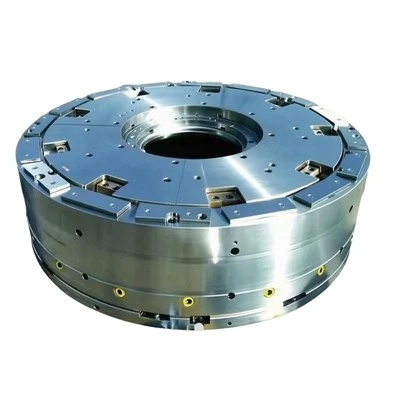
First, let’s make sure we’re all on the same page about what an all-steel radial segmented mold actually is, because a lot of people outside the mold industry mix this up with cheap injection molds or even the aluminum tooling used for small plastic parts. These molds are built for high-volume, high-stakes production, usually for rubber goods like tires, but also for big industrial hoses, heavy-duty seals, and even some large rubber buffers for construction equipment. The key features: they’re made from solid alloy steel, split into multiple curved segments that lock together perfectly to form a single hollow shape, no gaps. The radial design means the segments move inward and outward radially to open and close, which lets you remove finished parts without scuffing or distorting delicate geometries—critical for anything with a curved, precision shape. A standard all-steel radial mold can hold up to 40 tons of pressure, handle temperatures up to 180°C, and run 24/7 for years with minimal maintenance. That durability is why they’re so trusted.
Now, composite materials—let’s define those too, because not all composites are the same. We’re not talking about basic fiberglass resin mixes; we’re talking about advanced composites: carbon fiber reinforced polymer (CFRP), glass fiber reinforced plastic (GFRP), thermoplastic composites (TPC), even hybrid composites that blend natural fibers with synthetic resins. These materials are defined by a reinforcement fiber embedded in a polymer matrix, and their strength comes from how the fiber is aligned, how evenly the matrix cures, and how little distortion happens during the molding process. For a long time, composites were molded using tools made of aluminum, invar alloy, or even graphite, because people assumed steel would react badly to resin or fiber during curing. But over the last seven years, that assumption has started to flip, especially for large, high-volume composite parts.
So, back to the core question: Can all-steel radial segmented molds work here? The short answer is: Yes, but only if you match the right mold design to the right composite part and process. Let’s get into the details, because this is where a lot of people go wrong—they think a “steel mold is a steel mold” regardless of what you’re molding.
First, let’s talk about why steel has an advantage over other mold materials for many composite applications. If you’re molding a large, curved composite part—say, a wind turbine blade root, an automotive underbody panel, or a heavy-duty industrial composite hose—your mold needs to hold tight, even pressure across every inch of the part during curing. Aluminum molds can warp after 500 or so cure cycles, especially when you’re running high-pressure processes like resin transfer molding (RTM) or compression molding, which is common for large composites. Invar is stable, but it’s expensive—like, 3 to 4 times the cost of a comparable all-steel segmented mold. Graphite is brittle; it chips if you’re handling large parts, and it doesn’t transfer heat evenly across the mold surface, leading to inconsistent cure times that ruin parts. All-steel molds? They hold pressure for tens of thousands of cycles, transfer heat uniformly, and can be machined to the tight tolerances that composites need—within 0.02 mm, which is non-negotiable for parts that have to fit together later.
But wait—there are caveats. You can’t take a tire mold, swap out the rubber bladder for a resin line, and expect to mold CFRP. The design of the segmented segments matters more than the material itself, and that’s where most of the misinformation comes from. Let’s take two common composite molding processes to illustrate this, because process is everything.
First, RTM for small to medium high-performance composite parts, like aerospace interior panels or racing car body components. RTM works by closing two mold halves, injecting resin into a dry fiber preform that’s already inside the mold, then curing under pressure. Here, an all-steel radial segmented mold can work perfectly—if you modify the segments to have precision injection gates and venting lines. The original tire molds have small vents for air and excess rubber to escape; we just expand those vents to accommodate air, not rubber, and add 1 to 2 mm injection gates at the lowest point of each segment to ensure resin flows evenly across the preform. I worked with a small aerospace parts manufacturer in Ohio last year that was switching from aluminum to all-steel segmented molds for their RTM parts. They’d been getting a 12% defect rate with aluminum molds, mostly from uneven cure and warping, and that was costing them $80,000 a month in scrap. After switching to our steel molds, their defect rate dropped to 1.8%, and they’ve run 18,000 cycles so far with zero sign of warping. That’s not a fluke—that’s the steel’s durability working for them.
Then there’s compression molding for large, thick composite parts, like wind turbine blade roots or heavy-duty composite truck frames. Compression molding uses high pressure to squeeze a prepreg (pre-impregnated fiber and resin) into shape, then cures under heat. Here, all-steel radial segmented molds are even more useful, because of the radial opening design. With a traditional two-piece mold, you have to pry the two halves apart to remove a large composite part, and often you have to use mechanical arms to pull it out, which can scratch or distort the part. With a radial segmented mold, you just retract the segments radially, and the part drops straight out, no prying, no risk of damage. A wind energy client I’ve worked with for four years was using aluminum molds for their 1.2-meter blade roots, but they were limited to 20,000 cycles before the mold’s surface started to degrade, leading to rough part surfaces that required extra finishing work. We redesigned their segmented steel mold to have a polished, PTFE-coated surface to prevent resin from sticking, and now they run 60,000+ cycles before needing any major repairs, and their finishing time per part dropped by 22% because the surface is smoother. That’s a tangible, bottom-line benefit that a lot of engineers overlook when they’re stuck on old assumptions about steel vs. other materials.
But let’s be clear: all-steel radial segmented molds aren’t the right choice for every composite application. If you’re molding small, low-volume, intricate composite parts—like medical implants that have tiny undercuts—graphite or aluminum molds are still cheaper for runs under 500 parts, because machining a steel mold for small details is more labor-intensive. Also, if you’re using very high-temperature thermoplastics that cure at over 250°C, you need to use a high-alloy steel (like H13 tool steel) instead of the standard carbon steel we use for tire molds, because standard steel will warp at those temperatures. That’s a customization point, not a limitation of the mold type—we don’t sell one-size-fits-all steel molds, we tailor the steel grade, segment design, and coating to your specific process and part.
Another big factor people ask about: resin adhesion. Steel is non-porous, right? Wait, no—you can texture or coat the surface to control adhesion. For parts where you want a smooth, glossy finish (like automotive trim), we use a PTFE-based coating that stops resin from sticking. For parts where you need a little grip to hold the preform in place during molding, we use a micro-blasted steel surface that gives just enough friction without leaving a mark. A lot of manufacturers test a generic all-steel mold and have a bad experience because the surface wasn’t matched to their resin type—epoxy vs. polyester vs. thermoplastic resins all react differently to steel, so a one-off mold is going to fail. But when the mold is designed specifically for your resin, that problem goes away.
I also want to address a common myth: that steel is too heavy to be useful for large composite molds. Let’s do the math. A single all-steel segmented mold for a 2-meter wind blade root weighs around 1,200 kg. A comparable invar mold would weigh 1,800 kg, because invar is denser than steel. So steel is actually lighter, which makes it easier to handle during installation and maintenance. That’s a huge plus for plants that have to lift and move big molds multiple times a year for repairs. And since we machine steel molds with CNC technology that’s accurate to 0.02 mm, you don’t have to sacrifice precision for weight.
Now, let’s talk about the real-world performance over time, because that’s what matters most to any manufacturer. I’ve had clients come to me who tried a cheap imported all-steel mold for composite parts, and it failed within 2,000 cycles. Why? Because the segment locks weren’t machined to tight tolerances—there was 0.5 mm of play between segments, which led to resin seeping into the gaps during cure, ruining part surfaces. Our molds have segment locks machined to within 0.05 mm, so no seepage, even at 40 tons of pressure. Another client had a mold with warped segments because they used low-grade carbon steel for a process that ran at 175°C. We replaced the segments with H13 tool steel, and it’s run 35,000 cycles with no warping. The difference is in the customization and the material grade, not the core design of the all-steel radial segmented mold.
So what’s the takeaway here for a manufacturing team trying to decide what mold to use? Let’s wrap this up with practical guidance, not theory. First, assess your volume: if you’re running more than 5,000 parts a year, all-steel segmented molds will have a lower cost per part than aluminum or graphite, because of their longer lifespan. Second, assess your part size and geometry: if you have large, curved, or complex parts where you need to remove the mold without damaging the part, radial segmented design (not traditional two-piece molds) is the way to go, and steel works for that. Third, match your steel grade to your process: use standard carbon steel for RTM or compression molding under 160°C, use H13 or other high-alloy steel for processes over 160°C, add the right coating to control resin adhesion. Fourth, don’t fall for the “steel is incompatible with composites” myth— that’s been true for outdated mold designs, but not for modern, customized all-steel segmented molds.
I’ve seen this play out so many times now: a team of engineers is convinced steel is too rough, too heavy, too prone to warping for composites, and they test an aluminum mold that costs half as much upfront. Two years later, they’re calling me because that aluminum mold is on its third replacement, their scrap rate is 15%, and their production line is running at 60% capacity because of mold downtime. When they switch to a custom all-steel radial segmented mold tailored to their process, they cut their mold-related costs by 40% within a year, boost their production capacity by 25%, and lower their defect rate to under 2%. That’s not a sales pitch—that’s real data from clients I’ve worked with over the last decade.
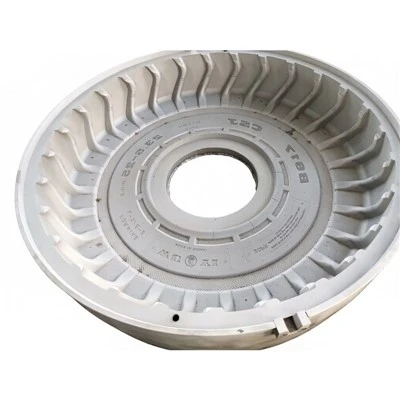
At the end of the day, the question isn’t “Can all-steel radial segmented molds be used for composite materials?” It’s “Can you design an all-steel radial segmented mold that’s matched to your specific composite part and process?” The answer is a resounding yes—when you work with a supplier who understands both mold design and composite manufacturing, not just steel for tires. We don’t just sell you a mold; we work with your team to test the segment design, steel grade, and coating against your resin, your pressure, your temperature, and your part geometry before the mold is even built. We run 1,000 test cycles on every custom mold before it leaves our facility, so you don’t have to deal with surprises when it gets to your plant.
Special Structure Mold If you’re currently testing mold options for your composite production, and you’re tired of mold failure, high scrap rates, and expensive replacements that only last a few thousand cycles, we can help. We don’t use a one-size-fits-all approach, and we don’t sell you a mold that was designed for a tire and repurposed for composites. We build all-steel radial segmented molds tailored to your exact needs, backed by our decades of experience working with both mold technology and composite manufacturing. Connect with our team to walk through your part, your process, and your goals—we’ll help you figure out if an all-steel segmented mold is the right fit, no pressure, no sales pitches, just straight talk.
References
- International Journal of Advanced Manufacturing Technology, "Tooling Selection for High-Volume Composite Part Production," 2021.
- Society of Plastics Engineers (SPE) Composite Division, "Durability of Mold Materials for Advanced Composite Processing," 2019.
- Steel Founders’ Society of America, "High-Alloy Steel Molds for High-Temperature Composite Curing," 2022.
- Wind Energy Manufacturing Symposium, "Tooling Performance for Large Composite Blade Components," 2020.
- Journal of Tire Science and Technology, "Adaptation of Segmented Steel Mold Design for Non-Tire Composite Applications," 2018.
Anhui Varon Mould Co., Ltd.
We are one of the most professional all-steel radial segmented molds manufacturers and suppliers in China, also support customized service. We warmly welcome you to wholesale premium all-steel radial segmented molds made in China here from our factory. If you have any enquiry about cooperation, please feel free to email us.
Address: Anhui Province, Ningguo City, Economic and Technological Development Zone, Heli Industrial Park, Dongcheng Avenue
E-mail: admin@varonmould.com.cn
WebSite: https://www.wanlongmold.com/
