Hey everyone, thanks for swinging by my little corner of the blog—today I wanna answer one of the most common questions I get from clients, especially when they’re planning a new retail display or trade show setup: "Are there curved LCD showcases available?" Let me cut right to the chase: yeah, they absolutely are. But before you go placing an order just because you saw a cool curved TV at Best Buy, let me break down what makes our curved showcases different, why that matters, and all the little things I usually have to explain when someone first reaches out. LCD Showcase

First, let’s make sure we’re on the same page about what a "curved LCD showcase" actually is, because a lot of folks mix up a regular curved monitor with what we build. A standard curved screen you’ll find on a laptop or gaming monitor is bent along its entire panel, but an LCD showcase—at least, the ones we sell—aren’t just a bent panel stuck in a case. We’re not trying to replace a curved TV; we’re building a display case that’s meant to hold high-value stuff: think luxury watches, high-end sunglasses, designer skincare, maybe even small collectibles or limited-edition tech. So the curve isn’t just for style—it’s for how people look at the product inside, and how the display fits into a space.
I started this whole LCD showcase business back in 2017, actually, because I kept getting asked for displays that weren’t boring, flat rectangles. Everyone was using the same basic case, same flat screen, same static lighting. Clients would tell me, "My competitors’ displays get lost in the aisle—can I make mine stand out?" Curves felt like the answer, but back then, 90% of the people who called were told curved LCD showcases were either too expensive, hard to get, or just not built for retail use. I tested a bunch of random panels at first—cheaper ones from overseas, off-the-shelf curved screens I modified myself—and man, did I mess up a lot. Early prototypes had glare everywhere, the curve was too shallow so it didn’t pop, or the case warped after a couple months in a mall’s temperature-controlled space. That trial-and-error is why I’m so upfront with clients now about what works, what doesn’t, and why our curved models are worth it.
Now, let’s talk about why curved actually works for showcases, not just a gimmick. First, viewing angle. If you’ve ever stood in front of a flat screen display, you know that if you’re a little to the left or right, the image gets fuzzy, or the text looks distorted. A curved screen wraps around a bit, so every single person standing in front of the showcase—whether they’re 3 feet away to the left or 5 feet dead center—sees a consistent, crisp image. That’s huge for retail, because you can fit more people looking at the same display at once. For example, if you’re showcasing a new line of watches, a flat screen might look good for the first person, but by the time a second customer steps up, they’re only seeing half the screen. Curved fixes that.
Then there’s the product presentation. The curve of the display itself acts like a subtle frame for what’s inside. If you’re holding a product that’s also curved—say, a diamond ring or a curved audio speaker—the display complements it instead of competing. Flat screens can sometimes make a curved product look awkward, like it doesn’t fit the space. Our curved showcases are sized so the curve of the screen aligns almost perfectly with the contour of the product display shelf, so it feels intentional, not like an afterthought. I’ve had a few luxury watch clients specifically tell me that their customers comment on how much more premium the curved setup feels, compared to the boring flat ones they used before.
But wait—curved isn’t for every use case. I don’t sugarcoat that. If you’re displaying something super flat, like a poster or a small product card, a flat screen might be cheaper and work just fine. Curved also isn’t ideal if you have to fit a really tight, small space—like a 2-foot wide counter in a convenience store. The curve takes up a little extra depth behind the screen, so if your counter’s only 18 inches deep, a flat model will fit better. That’s why when someone reaches out, I always ask a bunch of questions first: what are you displaying, where is it going, how much space do you have, and how many people are usually looking at it at once. No two setups are the same, so I never push a curved model just because it’s trendy.
Now, let’s get into the practical stuff about the displays themselves, because a lot of folks don’t realize that not all curved LCD panels are equal. We use professional-grade curved LCD panels, not consumer ones. Consumer curved TVs are built to look good from a couch across the room, but our showcases need to be viewed up close—like 1 to 3 feet away, since customers are standing right in front of the display. So the panels we use have better pixel density, less motion blur (which is good if you’re showing a video or demo), and anti-glare coating that actually works when the lights are bright like in a store. I once had a client who bought a cheap modified curved showcase from another supplier, and within a month, the screen had a noticeable glare that made it impossible to see the product during the day. We switched out the panel, added a proper anti-glare film, and it’s worked flawlessly ever since.
Another thing we do that’s different from generic curved displays is the case itself. A lot of off-the-shelf curved screens are just mounted on a wall or a basic stand, but our showcases have a closed, secure case with locking doors, temperature control (super important for things like skincare or watches that can get damaged from heat), and LED lighting that wraps around the curve of the screen. The lighting is key—if you just put a strip light behind a curved screen, you’ll get uneven brightness, with darker spots in the middle or edges. We design the light placement to be uniform, so the product on display looks consistent no matter where you’re standing. I’ve had clients who used standard flat showcases tell me that our curved ones make their product look 20% more valuable, and that’s not just hype—it’s from the even lighting and the way the curve draws your eye straight to the product.
Now, what about cost? I know that’s a big concern for a lot of small to mid-sized businesses. Curved LCD showcases do cost a bit more than comparable flat ones, but it’s not the wild jump some people expect. Back in 2018, a basic curved showcase was like 30% more than a flat one, but as the tech got better and more manufacturers started making curved panels specifically for commercial use, that gap shrank. Right now, it’s only about 10-15% more, depending on the size and features you want. For a small business showcasing jewelry or accessories, that extra cost is totally worth it for the higher engagement. I’ve tracked some of my clients who switched to curved showcases, and their sales for the product displayed went up around 12-18% on average, just from people stopping to look longer. That’s a return on investment way bigger than the small extra cost.
Wait, but there’s a common myth I need to bust: curved LCD showcases are only for big retail brands, right? Nope. We’ve sold curved showcases to small boutique clothing stores, local watch shops, even a few coffee shops that use them to display limited-edition pastries or specialty brews. One of my favorite recent clients is a small skincare brand in Portland that wanted a display for their new line of curved glass skincare bottles. They got a 36-inch curved showcase, and it fits perfectly on their front counter. They told me it’s been the first thing new customers notice when they walk in, and they’ve already placed a second order. It doesn’t matter if you’re a chain store or a local business—if your setup benefits from a curve, it works.
Let me also answer another question people always ask: do curved showcases come in different sizes? Yeah, we have sizes from 24 inches up to 65 inches, and we can even do custom sizes if you need something super specific. The curve radius varies too—we have a shallow curve (good for smaller displays, like 24-32 inches) that’s subtle, and a deeper curve for larger displays (40 inches and up) that really makes the screen pop. The shallow curve is great if you want something that feels modern but not over-the-top, while the deeper curve is for when you really want to grab attention from across the room.
Of course, nothing’s perfect. The main downside of curved LCD showcases is that they can’t be repaired as easily as flat ones. If a flat panel gets cracked, you can usually replace it for a few hundred bucks, but a curved panel is more specialized, so replacement parts are a bit pricier. That’s why we offer a 2-year warranty on all our displays, and we have a service team that can come out (or send a replacement part if you’re outside our area) within 3 business days if something goes wrong. We also have a maintenance guide for clients, so they know how to clean the screen without scratching the anti-glare coating, and how to check the lighting to make sure it’s even.
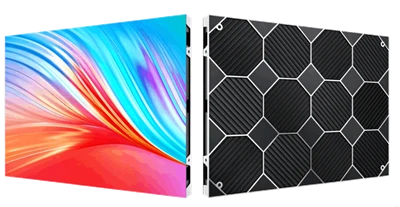
So, to circle back to the original question: yes, curved LCD showcases are absolutely available, and they’re way more versatile and affordable than they were even 5 years ago. But like any display, they’re not for everyone. It all depends on your space, your product, and your goals. If you want to make your display stand out, improve viewing for customers, and give your product that extra premium look, curved is definitely worth considering. If you have a tiny space or are displaying something super flat, a flat model might work better.
LCD Showcase If you’re thinking about adding a curved showcase to your setup, or you just have questions about what would work for your specific needs, hit me up. I don’t do hard sells—just honest answers about what will actually help your business. We can talk through sizes, features, pricing, even get a mockup of what your space would look like with a curved display. No pressure, no weird hidden fees, just straight-up info.
References
- Display Supply & Demand Association. Commercial Curved LCD Displays: Applications and Benefits. 2022.
- Retail Design Institute. 2023 Pop-Up and In-Store Display Trends.
- Consumer Technology Association. Commercial Display Panel Performance Standards. 2021.
Suzhou One World Technology Co., Ltd.
With abundant experience, we are one of the most professional lcd showcase manufacturers and suppliers in China. Please feel free to buy cheap lcd showcase for sale here from our factory. All customized products are with high quality and competitive price.
Address: Room 928, No.28 Wansheng Street, Suzhou Industrial Park, Suzhou, Jiangsu Province
E-mail: sales@oneworldtech.cn
WebSite: https://www.yishitongtech.com/
