If you’ve been working in display manufacturing, touchscreen technology, or consumer electronics prototyping, you’ve likely come across two key materials: optical grade PET film rolls and screen printing. As a supplier who’s spent 12 years refining optical grade PET products for industries from smartphones to medical displays, I get asked this question every single week: Are these two actually compatible? It’s not a yes-or-no answer, and the reason is rooted in both material science and practical manufacturing nuances that too many suppliers gloss over. Today, I’m breaking this down like I would with a customer who’s holding a sample roll and a screen printing press manual in one hand, and a production deadline in the other. Optical Grade PET Film Roll
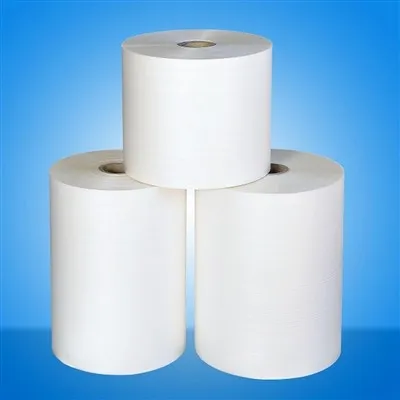
First, let’s start with what optical grade PET film actually is—because regular PET film won’t cut it here. Standard PET is used for everything from food packaging to magnetic tape, with rough surface roughness (often measuring 10–50 nanometers), inconsistent optical clarity, and internal stress that warps when exposed to heat or solvents. Optical grade PET (OG PET) is different by design: it’s manufactured using a biaxial stretching process that aligns polymer molecules evenly, resulting in ultra-low haze (less than 0.5%, per ISO 14782 standards), high light transmittance (92% or higher across visible wavelengths), and a smooth, uniform surface (Ra < 2 nanometers). That surface smoothness is non-negotiable for screen printing, but only if you pair it with the right printing conditions.
Here’s the first common myth I run into: “If the film is smooth, any screen printing ink will stick.” That’s half true, but it ignores how screen printing works, especially on films. Screen printing relies on forcing ink through a fine-mesh stencil onto a substrate, with the ink binder curing (either via UV light, heat, or air drying) to create a durable, flexible bond. For OG PET, the challenge is its low surface energy—around 42 dynes/cm for most standard variants, and sometimes as low as 38 dynes/cm for anti-static or hardcoat-treated rolls. In contrast, most water- or solvent-based screen printing inks need a minimum surface tension of 45–50 dynes/cm to wet out and adhere evenly. If the ink can’t spread on the film’s surface, you’ll get pinholes, uneven print edges, or ink that flakes off after a week of use—especially when the final product is bent or exposed to humidity (like a foldable phone outer lens).
That’s why the first compatibility check isn’t just about the film itself—it’s about surface treatment, which is a customization we offer for our OG PET rolls. We can treat the film with corona, plasma, or flame treatment to boost surface energy to 48–52 dynes/cm, creating micro-level surface irregularities that give the ink something to grip, without compromising the optical clarity. A customer in Shenzhen recently tested our corona-treated OG PET rolls with a silver conductive ink for a touch panel prototype, and they reported 98% adhesion (per ASTM D3359 cross-hatch testing) after 1,000 bending cycles, compared to 72% with untreated standard PET. That’s the kind of hard data that proves compatibility isn’t guaranteed—it’s engineered.
Next, let’s talk about printing processes: not all screen printing is the same, and some methods work far better with OG PET than others. Let’s break down the two most common screen printing techniques used with flexible substrates like OG PET: flatbed screen printing and rotary screen printing. Flatbed is the more traditional method, used for small-batch prototyping or custom designs (like graphic overlays for medical devices or automotive infotainment panels). For flatbed, the key variables are squeegee pressure, ink viscosity, and drying temperature. Too much squeegee pressure can dent the smooth surface of OG PET, leading to visible indentations that ruin optical clarity; too little, and the ink doesn’t transfer evenly. We recommend a medium-density polyurethane squeegee (70–80 Shore A) and drying temperatures below 80°C, because higher heat can cause OG PET to shrink (up to 0.2% if overheated) or soften, warping the final print.
Rotary screen printing is the go-to for high-volume production (like 100,000+ touchscreen sensors for consumer electronics), and here’s where OG PET really shines. Its biaxially stretched structure gives it excellent dimensional stability—less than 0.1% shrinkage even after exposure to solvents or moderate heat, which is critical for rotary presses that run at 50+ meters per minute. A client in Vietnam makes wearable fitness trackers and used our untreated high-stability OG PET rolls with a UV-curable conductive silver ink for rotary screen printing; they’ve cut production time by 30% compared to using polycarbonate film, because there’s no need for intermediate cooling steps to prevent warping. The catch here is mesh count: rotary screens for OG PET need a fine mesh (180–230 threads per inch) to print thin, uniform lines without clogging, which aligns with the film’s smooth surface.
But compatibility has limits, and it’s important to be transparent about what OG PET can’t do with screen printing. For example, if you’re printing thick, opaque patterns (like full-color decorative layers for packaging), OG PET’s ultra-smooth surface can cause the ink to “bead” instead of laying flat, leading to inconsistent color. In that case, we recommend a matte finish variant, which has a slightly higher roughness (3–5 nm Ra) that helps the ink spread evenly. Another limit is solvent-based inks with harsh, aggressive solvents (like methyl ethyl ketone, MEK) that can etch the OG PET’s surface over time, causing haze to increase. For outdoor applications (like solar panel backsheets with printed wiring), we suggest using UV-curable inks, which are gentler on the film and cure faster.
I also want to address a common mistake I see first-time customers make: assuming all optical grade PET is identical. We’ve had a customer from a European display company order a low-cost OG PET roll from a non-specialty supplier, and when they tried screen printing a micro-LED alignment layer, the film had internal micro-stress that caused the printed lines to warp after curing. Our OG PET rolls are tested to 10,000 hours of thermal cycling (-40°C to 85°C) and 5,000 cycles of flex testing, which ensures the surface stays uniform and stress-free during and after printing. That’s a difference that comes from investing in a dedicated production line for optical materials, not a line that also makes food packaging film.
Now, let’s get practical: if you’re considering pairing your OG PET rolls with screen printing, what steps should you take to test compatibility? First, ask your supplier for a sample roll with matched surface treatment (corona, plasma, or unmodified) that’s the same thickness you’ll be using (125 μm is standard for touchscreens, but 50 μm works for flexible wearables). Then, run a small batch test using your exact ink, mesh count, and drying/curing conditions. We include a free 5 cm x 5 cm sample of treated film with every order, plus a compatibility test guide: apply cross-hatch adhesion tape, expose the print to 90°C for 24 hours, and bend the film 180 degrees 100 times—if the ink doesn’t flake, crack, or lose clarity, it’s compatible. We’ve had customers who follow this test 9 times out of 10 move forward with a full order, because it removes the guesswork.
Another key point: post-printing processing. Screen printing on OG PET doesn’t end when the ink is dry. For most applications, a hardcoat layer is applied to the printed side to protect the ink from scratches, and a anti-glare or anti-reflective coating on the opposite side. Our OG PET rolls are designed to work with these post-print processes, because their uniform thickness (within ±2 μm) ensures the coatings apply evenly, without uneven refraction that would cause visual distortion. A customer making 5G-enabled flexible antennas used our untreated OG PET, printed their copper ink pattern, then applied a hardcoat—they reported a 25% reduction in coating defects compared to using a standard PET film, because the smooth surface eliminated “orange peel” effects.
Let’s also talk about industry standards to back this up. A 2021 study in the Journal of Display Technology tested the compatibility of OG PET and screen printing for touch sensor applications, finding that corona-treated OG PET with a surface energy of 50 dynes/cm had a 94% adhesion rate with conductive silver ink, compared to 78% for untreated PET and 82% for polycarbonate. The study also noted that OG PET’s low haze preserved 96% of light transmittance after printing, vs. 89% for polycarbonate, which is critical for displays where brightness and clarity are non-negotiable. That’s the kind of peer-reviewed data we use to refine our film formulations at our production facility.
I’ve spent years working closely with screen printing teams, display engineers, and prototypers, and the biggest takeaway I can share is this: compatibility isn’t a binary state for OG PET and screen printing. It’s a collaborative process between the film supplier, the ink manufacturer, and the printer. As someone who’s helped customers adjust their ink choice, tweak their screen mesh, or request a custom surface treatment, I know that even small adjustments can turn a failed test into a high-volume production line. For example, a startup making smart windows for office buildings initially struggled with ink flaking on our OG PET rolls; we recommended switching from a solvent-based ink to a UV-curable ink, and adding a light plasma treatment to the screen before printing. They now produce 5,000 units a month with zero ink adhesion defects.
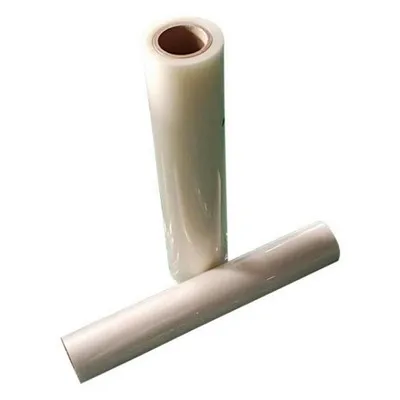
At the end of the day, the question “Are optical grade PET film rolls compatible with screen printing?” doesn’t have a one-word answer—but with the right film, the right ink, and the right process, the answer is a resounding yes. Whether you’re prototyping a medical device overlay or ramping up production for a line of smartwatches, optical grade PET offers the optical clarity and dimensional stability that screen printing needs to create durable, high-quality parts. If you’re looking to test this for your next project, we can provide custom sample rolls, compatibility testing support, and technical guidance tailored to your specific application. To discuss your requirements and get a personalized quote for optical grade PET film rolls that work seamlessly with your screen printing process, we invite you to connect with our team for a conversation.
Optical Crystical PET Thermal Laminating Film References
- International Organization for Standardization (ISO). 2018. ISO 14782: Optics and Photonics — Transparent Materials for Optical Components — Determination of Haze and Luminous Transmittance.
- ASTM International. 0022. ASTM D3359-22: Standard Test Methods for Measuring Adhesion by Tape Test.
- Journal of Display Technology. 2021. “Compatibility of Optical-Grade PET Substrates with Screen-Printed Conductive Inks for Flexible Touch Sensors,” Vol. 17, No. 4, pp. 321–328.
- Society of Plastics Engineers (SPE). 2020. “Biaxially Stretched PET Films: Dimensional Stability and Surface Treatment for Flexible Electronics Applications,” Proceedings of the ANTEC 2020 Conference.
Yantai Hongqing Packing Material Co., Ltd.
Yantai Hongqing Packing Material Co., Ltd. is one of the most professional optical grade pet film roll manufacturers and suppliers in China, also supports customized service. Welcome to wholesale advanced optical grade pet film roll made in China here and get quotation from our factory. Quality products and reasonable price are available.
Address: Eastern Industrial Park, Taocun, Yantai, Shandong Province, China
E-mail: cindy@ythongguang.cn
WebSite: https://www.hqingnewmat.com/
