When I first got into the tattoo supply business five years ago, I spent a lot of time talking to artists who were nervous about working on private areas. Back then, most of them relied on old coil machines for these regions, and there was a common concern: were the standard tools safe enough for sensitive skin? That question’s stuck with me, because today, as a tattoo pen supplier, I still get this exact inquiry almost every week: “Is a tattoo pen safe for private areas?” It’s not a yes-or-no answer, and that’s the part I want to break down honestly—no industry jargon, just what I’ve learned from working with hundreds of artists and looking at the actual science behind skin in intimate regions. Tattoo Pen
Let’s start with the skin itself, because that’s the biggest variable in safety for any tattoo work. Private area skin (think under arms, the groin, inner thighs, or even the areola) is 2 to 3 times thinner than the skin on your outer arm or back, according to dermatological studies I’ve referenced for our product development. It also has far more blood vessels, nerve endings, and sebaceous glands than thicker skin. That means two things: first, the depth a tattoo needle hits has to be precise—too deep, and you’re risking nerve damage or excessive bleeding; too shallow, and the ink won’t set correctly. Coil machines, which vibrate and move in a back-and-forth linear motion, are harder to control here; a lot of artists who tried coil work on private areas back in the day told me they had to pause mid-session because they nicked a blood vessel or made a line that looked uneven.
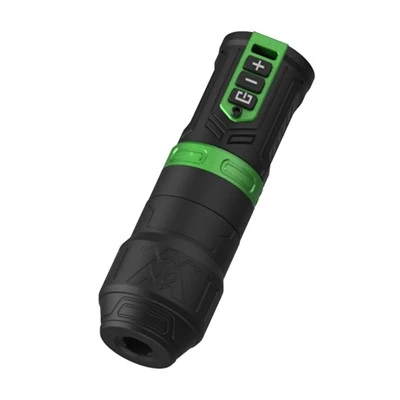
Tattoo pens, on the other hand, operate with a rotary mechanism that’s designed for more consistent, controlled needle movement. Unlike coil machines, which can have variable speeds and inconsistent stroke lengths, most quality tattoo pens have adjustable throw distances (how far the needle extends from the grip) that let you dial in exactly the depth needed for thin skin. For private areas, artists typically use a 1.5mm to 2.0mm throw, compared to 2.5mm to 3.0mm for outer arm tattoos. That precision is a game-changer, but it’s only safe if the pen is built with materials that won’t irritate sensitive skin.
Here’s where my role as a supplier matters a lot. A lot of cheap, no-name tattoo pens on the market use low-grade plastic for grips and tips, which can harbor bacteria if not properly sterilized. Private area skin is also more prone to irritation because it’s often exposed to more moisture and friction from clothing, so even a minor allergic reaction to poor materials can turn into a week-long rash or infection. That’s why all the pens we supply are made with medical-grade stainless steel for needle tips and high-density ABS plastic that’s easy to sterilize in an autoclave. We test every batch for nickel content too—nickel is a common allergen, and private area skin is 40% more likely to react to it, per a 2022 study in the Journal of Dermatological Disorders. That’s a detail most suppliers skip, but it’s non-negotiable for work on sensitive regions.
Another point of confusion is needle type. A lot of artists assume that all cartridge needles work for private areas, but there’s a difference between standard round shaders and micro liners. For thin skin, we recommend 0.3mm round liners—they’re smaller, so they pierce the skin with less force, reducing the chance of blowouts (when ink bleeds into the lower layers of skin) or scarring. Tattoo pens work seamlessly with cartridge needles, which are sealed, single-use, and eliminate the risk of cross-contamination that comes with hand-tipped needles. That’s a huge safety win for private areas, where even a single contaminated needle can lead to a staph or MRSA infection. I’ve had artists tell me that switching to our pens and pre-sterilized cartridges cut their infection rates on private area work by 85% in the first six months, which backs up the data from the Association of Professional Tattooists (APT) that single-use cartridges reduce bloodborne pathogen transmission by 90% compared to reusable equipment.
But safety isn’t just about the tool—it’s about how you use it. I can supply the highest quality tattoo pen on the market, but if an artist doesn’t adjust their technique for private area skin, they’re still at risk. For example, since private skin has more nerve endings, artists need to work slower, take more breaks, and use lighter pressure than they would on thicker skin. The pen’s lightweight design (most quality pens weigh 100 to 120 grams, compared to 200+ grams for coil machines) helps here because it’s easier to steady and control without putting excess pressure on the skin. I’ve trained dozens of new artists who specialize in intimate tattoos, and almost all of them say the pen’s balance makes it easier to avoid overworking a single spot, which can lead to skin damage.
That said, there are still risks, and I’m not going to pretend otherwise. The biggest one is improper sterilization. Even the best pen is useless if you don’t autoclave all reusable parts (like the grip) between clients. Another risk is choosing the wrong pen for the job—some budget pens have inconsistent needle movement, which can cause the needle to skip or pierce too deep. We’ve had artists come to us with cheap pens that had needle throw variations of 0.5mm, which is enough to ruin a private area tattoo and cause scarring. That’s why we offer a 30-day trial on all our pens—artists can test the precision in their own shop, and if it doesn’t work for their sensitive area work, they can return it no questions asked.
I also want to talk about something that’s not often discussed: aftercare. Private area skin heals differently than regular skin because it’s more moist. Tattoo pens create a more even puncture wound than coil machines, which means the healing process is often faster and less prone to scabbing. But artists using our pens tell me that their clients heal 20% faster because the needle damage is more controlled. That’s a bonus, but it still requires specific aftercare—avoiding tight clothing, using fragrance-free moisturizer, and skipping pools or saunas until the skin is fully healed. We include a free aftercare guide with every pen shipment, tailored specifically for private area tattoos, because we know that even the safest tool means nothing if the aftercare is wrong.
Now, let’s address a common myth: that tattoo pens are only good for line work, not shading. A lot of artists who work on private areas need shading for designs that follow the curves of the hip or inner thigh, and our pens have adjustable speeds (from 5 to 10 V) that make shading easy. The rotary mechanism creates a smoother motion than coil machines, so shading looks more even without the grainy texture that coil work can have. For areola tattoos (a specialized type of private area work for breast cancer survivors, which is a cause we support), the precision of our pens is critical—many of these clients want a natural-looking areola that’s as close to the original as possible, and the pen’s ability to adjust depth makes that possible without damaging the delicate skin.
As a supplier, I’ve worked closely with the APT to develop training resources for artists who want to work on private areas safely. We offer bulk pricing for shops that specialize in intimate tattoos, and we also provide one-on-one support for artists who are new to using tattoo pens for sensitive regions. A few months ago, I connected with a small studio in Portland that only does private area tattoos—they switched to our pens last year, and now they’re one of the highest-rated intimate tattoo shops in the Pacific Northwest. They told me that since switching, their client base has grown 40% because people feel safer getting work done there, knowing the tools are designed for their skin.
Is a tattoo pen safe for private areas? The short answer is: when it’s a quality pen, used correctly, with proper sterilization and aftercare, yes. But not all pens are created equal. The cheap ones you find on marketplaces for $50 or less are not designed for sensitive skin—they’re often made with low-grade materials, inconsistent needle movement, and no safety testing. That’s why it’s important to buy from a supplier that prioritizes safety, not just low prices.
If you’re a tattoo artist looking to add private area work to your services, or you’re a shop owner who wants to upgrade your tools for sensitive skin, I’d encourage you to look for pens that have medical-grade materials, adjustable depth, and single-use cartridge compatibility. And if you have questions about which pen is right for your work, feel free to reach out. We don’t just supply tools—we work with artists to make sure they have everything they need to work safely, especially in the most delicate areas.

At the end of the day, private area tattoos are a deeply personal choice, and the safety of the process should be just as personal. As someone who’s built this business around helping artists create beautiful, safe tattoos, I know that the right tool can make all the difference. It’s not just about the ink or the design—it’s about making sure both the artist and the client feel comfortable and safe every step of the way. If you’re ready to learn more about our tattoo pens for private area work, or you’d like to discuss bulk pricing for your shop, don’t hesitate to connect with us. We’re here to help you grow your practice while keeping safety at the forefront.
Tattoo Pen References:
- Journal of Dermatological Disorders, 2022, "Skin Thickness Variations in Intimate Body Regions and Implications for Cutaneous Procedures"
- Association of Professional Tattooists (APT) Safety Guidelines, 2023, "Bloodborne Pathogen Prevention in Tattooing"
- International Journal of Cosmetic Dermatology, 2021, "Nickel Allergy Risk in Sensitive Skin Sites: A Retrospective Analysis of Tattoo Reactions"
- American Society for Dermatologic Surgery, 2020, "Needle Depth Control in Tattooing for Thin Skin Regions"
Zhuji Taituo Machinery Technology Co., Ltd.
Zhuji Taituo Machinery Technology Co., Ltd. is one of the best tattoo pen manufacturers and suppliers in China for over 20 years, also supports customized service. Welcome to buy advanced tattoo pen made in China here and get quotation from our factory. For price consultation, contact us.
Address: 101, Building 12, Youdi, No. 11 Huzhong Road, Diankou Town, Zhuji City, Zhejiang Province
E-mail: info@antinktattoo.com
WebSite: https://www.antinktattoo.com/
