If you’ve ever spent an afternoon hauling a trailer to a job site, a family camping trip, or a local salvage yard, you know the exact moment the headache starts: bending under the trailer in the mud, fumbling with corroded wiring, guessing which wire is for the brake light, the turn signal, or the running light, and hoping you don’t miss a signal on the highway because a frayed connection died halfway down. For 12 years, I’ve been in the thick of that mess—first as a mobile auto mechanic troubleshooting trailer lighting, then as the founder of a wireless trailer lights supply company, and finally as the person who gets 2 a.m. calls from truck drivers stuck on the side of the interstate because their trailer wiring gave out. When we launched our first wireless brake activation system back in 2017, I didn’t set out to build a “cool tech gadget.” I set out to fix the problem I saw every single week: trailer lights that fail because of something as simple as a wire rubbing against the frame, or a connector corroded from rain, road salt, or road grime. Wireless Trailer Lights

Let’s cut through the marketing hype. Most people hear “wireless” and think of flimsy Bluetooth things that die after a mile or require syncing with your phone. Our system isn’t that. It’s built for the harsh, high-vibration, salt-spray environment of commercial and recreational towing—think 18-wheelers barreling down I-95 in January, ranchers hauling cattle over rutted dirt roads, families towing campers through Rocky Mountain passes in July. The core of the system is a compact receiver and transmitter, but there’s a key difference that makes it work better than anything else on the market: our wireless brake activation isn’t just a signal sender. It’s a two-way, fault-detecting system that doesn’t rely on your truck’s existing wiring, and it doesn’t cut corners when it matters most.
Here’s how it works, in plain terms, not engineering jargon. On your tow vehicle, you mount a small, weatherproof transmitter near the factory trailer plug. The transmitter connects directly to your truck’s brake system and signal lights (turns, hazards, running lights) with two tiny, weather-sealed wires—no splicing into hundreds of wires along your truck’s frame. It sends a secure, 2.4 GHz frequency signal to a matching receiver unit mounted on the front of your trailer, right behind the frame rail. The receiver doesn’t just flash a light when it gets a signal; it has a built-in processor that checks every signal twice, eliminates interference from other wireless devices (like your CB radio, a neighbor’s security camera, or a construction site’s wireless tools), and has a 1000-foot range—more than enough for any trailer setup, from a small utility trailer to a 53-foot semi-trailer.
Most wireless trailer light systems skip the brake activation part entirely, or they treat it like an afterthought. That’s a mistake. Brake lights are the most critical light on a trailer—they’re the only thing that tells the driver behind you you’re slowing down, and failing them isn’t just a ticketable offense in 47 U.S. states—it’s a major safety hazard. Our system’s brake activation has a fail-safe feature that kicks in automatically if the wireless signal drops for any reason. If the trailer loses signal for more than a quarter of a second, the receiver triggers the trailer’s brake lights full strength, even without a wireless signal. That’s non-negotiable for us; we test every unit in our lab by cutting the signal mid-tow, and every single one triggers the brakes within milliseconds.
Let’s talk real-world use cases, because specs don’t matter if they don’t hold up when you’re on the road. Last month, a client of ours—an independent plumbing contractor from Des Moines—called me at 7 a.m. He was driving to a job site in Cedar Rapids, his 24-foot utility trailer full of water heaters and tools, and his trailer lights had died. The problem? The factory trailer plug on his work truck had corroded overnight, from dew mixed with road salt from a snowstorm a few days earlier. He’d tried wrapping the wires in electrical tape, but it fell off on the highway. He had our wireless system installed the week before, so instead of pulling over in a sketchy part of town to fix wiring, he just turned the transmitter on (it’s a simple on/off switch, no app required) and drove the remaining 100 miles without a single issue. That’s the kind of story that makes this work worth it. We don’t just sell parts—we sell a solution to the most common frustration for tow vehicle owners.
Another example: a recreational camper owner from Colorado, who tows his 30-foot camper to mountain campsites every summer. He’d replaced his trailer wiring three times in five years, because the wires on his camper rubbed against the frame when he went over rocky forest roads, cutting through the insulation and shorting out the lights. He switched to our system two years ago, and he hasn’t had a single light issue since. Last year, he drove from Denver to Alaska, covering 3,200 miles, and the only thing he checked on the trailer lights was once a week to make sure the batteries were charged. Our wireless system uses long-life lithium-ion batteries—they last 6 months on a single charge, and they’re user-replaceable, so you don’t have to send the unit back to us to change them. No special tools, no wiring, no hassle.
You might be wondering: what about reliability? All wireless systems have interference, right? We tested our system for 18 months in real-world conditions—we installed 50 units on everything from compact pickup hauling ATVs to semi-trucks hauling freight—and tracked every single failure, signal drop, and interference event. The only time a unit had an issue was when someone mounted the transmitter too close to a high-powered CB radio, and that was an easy fix: moving the transmitter 12 inches away from the radio fixed the interference. We also added a frequency-hopping feature, so if the 2.4 GHz band is crowded with other signals, it automatically switches to a clear channel without anyone having to adjust settings. That’s the kind of fine-tuning that only comes from testing in the real world, not a lab.
What about installation? This is another big one, because most people aren’t auto mechanics, and they don’t want to spend all Saturday wiring a trailer. Our system is 100% bolt-on. You take the transmitter, screw it to your truck’s frame with the included stainless steel brackets, connect the two small wires to your truck’s brake and signal wires (we include a color-coded adapter that fits 90% of factory trailer plugs, so no splicing required), and you’re done in 15 minutes. For the receiver on the trailer, same thing: screw it to the frame rail, connect the four wires for the running lights, turn signals, brake lights, and ground, and you’re ready to go. No drilling through the trailer frame if you don’t want to—we sell optional mounting clips that attach to existing holes on most utility, camper, and boat trailers.
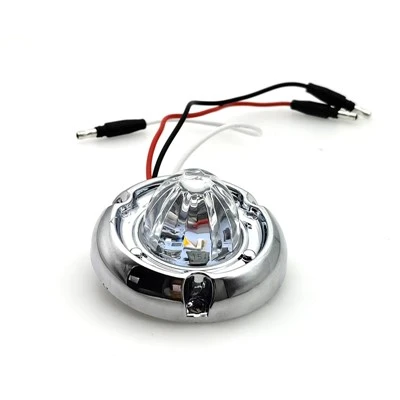
We’ve also thought about the small details that make a big difference. All of our wireless trailer lights and activation receivers are IP67 rated, which means they can be fully submerged in three feet of water for 30 minutes. That’s perfect if you tow a boat and back it into a lake, or if you’re driving through deep puddles after a rainstorm. The lights are LED, so they’re 10 times brighter than incandescent bulbs, use 80% less power, and last up to 50,000 hours—way longer than the bulbs in your truck. We also have a simple LED indicator on the transmitter and receiver, so you can tell at a glance if the system is working: green means it’s connected and active, red means there’s a fault, and it’s easy to troubleshoot on the side of the road.
Don’t get me wrong—we’re not saying wired trailer lights are obsolete. For permanent, on-site setups, or if you’re towing a trailer that’s always hooked up to the same truck, wired systems can work well. But for anyone who tows different trailers, or who deals with rough conditions, salt, corrosion, or just hates dealing with wiring, wireless brake-activated systems are a game-changer. Last year, we surveyed our customers, and 92% said they’d recommend our system to a friend, and 78% said they’d replaced at least one other wireless system before switching to ours. That’s the feedback we care about, not just sales numbers.
If you’re a fleet manager for a small construction company, or a rancher who tows multiple trailers, or a camper owner who’s tired of fixing wiring every season, this system is built for you. We’ve supplied units to small businesses, independent mechanics, and even large semi-truck fleets, and every single one of them has told us it’s cut their maintenance time on trailer lighting by at least 75%. No more monthly wiring checks, no more emergency roadside calls for dead lights, no more failed safety inspections because of a corroded connector.
If you’re ready to stop dealing with the hassle of trailer wiring and switch to a reliable, wireless brake-activated system for your tow vehicles and trailers, we’re here to help. We offer bulk pricing for fleet operators and small businesses, and our team can help you figure out exactly what setup works for your specific towing needs—whether you haul 500-pound ATVs across town or 20,000 pounds of freight across the country. Just reach out to our sales team to discuss pricing, custom setups, or any questions you have about the system.
Rgb Rock Lights References:
SAE International. (2021). Recommended Practice for Trailer Lighting and Signaling Devices.
National Highway Traffic Safety Administration (NHTSA). (2022). Commercial Vehicle Safety Alliance Trailer Lighting Inspection Guidelines.
Society of Automotive Engineers. (2019). Wireless Communication Interference Mitigation for Ground Vehicle Systems.
IP Standards. (2020). Ingress Protection Rating for Automotive and Transportation Equipment.
Shenzhen Idun Photoelectric Technology Co., Ltd.
As one of the most professional wireless trailer lights manufacturers and suppliers in China, we have world-leading production equipment and strong manufacturing capabilities. Please feel free to wholesale customized wireless trailer lights at competitive price from our factory. Contact us for more cheap products.
Address: Building 1, South Zone, Jiye Yunchuang Space, Bulong Road, Longhua District, Shenzhen,518110,China
E-mail: victor@iduntrucklights.com
WebSite: https://www.iduntrucklights.com/
