If you’ve ever walked through a factory and watched a stack of heavy pallets get dragged across the floor by a forklift, or seen a team of workers carry cartons up and down three levels just to restock a picking area, you know how much wasted time and energy that adds up to. As a Vertical Conveyor Systems supplier, I talk to factory managers every week who are stuck with inefficient material flow because they chose their vertical conveyor layout wrong in the first place. It’s not just about installing a machine—it’s about fitting that machine to your existing space, your production flow, and your team’s daily workflow. I’ve spent 12 years troubleshooting these layouts, and today I’m breaking down the steps that actually work, no fancy jargon, just real-world lessons. Vertical Conveyor Systems
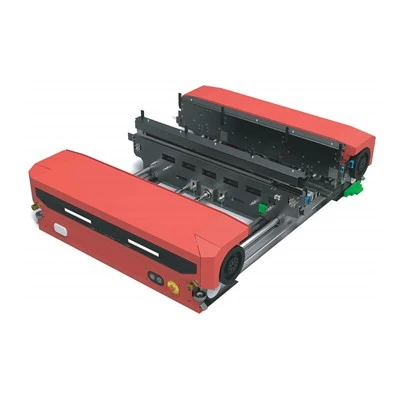
First, you have to start with your current bottlenecks, not just the empty wall space. I once worked with a small e-commerce fulfillment center that had a vertical conveyor installed against a back wall, right next to a loading dock. At first, it seemed like a good use of unused space, but their order pickers had to walk 150 feet from the conveyor to the shipping area, and they were missing 8% of their daily order targets because of that extra walk. The problem was they didn’t map their existing material flow before picking a spot. Before you even measure for a conveyor, pull a week’s worth of time and motion data: how long does a pallet take to move from production to storage? How many cartons do your pick teams shuttle between floors in an hour? Where do your loading and shipping docks sit relative to your main production lines? That data will tell you where the “pinch points” are, not just where there’s room. Most factories waste space because they think “empty wall” equals “good spot,” but the best layout is always tied to the path your materials already take.
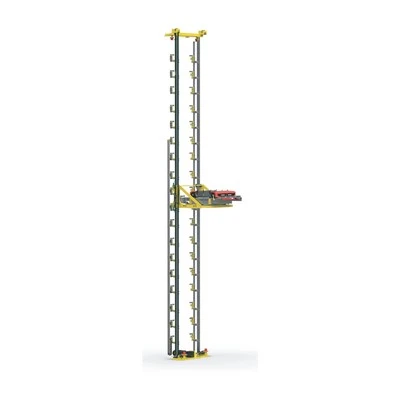
Next, you need to match the conveyor type to your load, not the other way around. There are three main vertical conveyors we supply, and each works for a totally different setup, so picking the right one changes your layout entirely. If you’re moving heavy pallets (500 to 5,000 pounds) between storage and production, a reciprocating vertical reciprocating conveyor (VRC) is your best bet. These have a single platform that goes up and down, no need for multiple lanes, and they can be integrated directly into existing dock levels. That means you don’t have to add extra ramps or stairs, which saves floor space. But if you’re moving small, uniform cartons or totes—like in a picking line—an enclosed vertical lift (EVL) is better. EVLs have multiple levels with separate entry and exit points, so you can have cartons coming off a packing line on level 2 and going straight to shipping on level 1 without extra handling. Then there’s the vertical spiral conveyor, which is perfect for lightweight, high-volume items like boxes of small parts or retail products; it wraps around a central axis, so it takes up almost no flat floor space at all. I once helped a automotive parts factory switch from a forklift-only setup to a spiral conveyor layout, and they freed up 2,000 square feet of floor space that they used for a new assembly line. But here’s the catch: if you install a spiral for heavy pallets, it’ll break down in a month. Matching the conveyor to your load means you don’t have to rework the layout 6 months later.
Once you’ve picked the right machine, the layout’s next big factor is access and safety. This is where a lot of factories cut corners, and it comes back to bite them. OSHA requires 30 inches of clear space on all sides of a vertical conveyor for maintenance, so if you jam that right next to a storage rack, your techs can’t change a belt or fix a sensor without moving pallets out of the way. But it’s not just safety rules—it’s workflow access. Pickers need to get to the entry and exit points quickly, so don’t tuck the conveyor into a corner where only one person at a time can reach it. I had a client last year who installed their conveyor between two shelving units, and their pick team was waiting in line for 10 minutes every shift just to drop off cartons. We moved the exit point 5 feet out into a wide aisle, and that wait time dropped to 1 minute. Also, think about how you load and unload: if your conveyor is moving pallets, make sure the entry level matches your forklift’s height, and the exit level lines up with your storage racks. If the exit is even an inch off, forklift operators will have to adjust, which slows down the whole process.
Then there’s vertical integration with your existing equipment, not just standing alone. A vertical conveyor is only as good as the machines that feed it and take items off it. If your production line is on level 2, and your conveyor’s entry point is on level 1, you’ll still have workers carrying items up to the conveyor. The best layouts connect the conveyor directly to your line and your shipping stations with horizontal conveyors or pick-to-cart lanes. I worked with a food and beverage factory that was moving cases of soda between level 1 (production) and level 3 (storage) for distribution. At first, they had the conveyor sitting 20 feet away from the line, so workers had to hand-carry each case. We installed a small horizontal roller conveyor that ran from the end of the bottling line straight into the conveyor’s entry point, and cut that handling time by 70%. Another client, a pharmaceutical warehouse, added a small buffer zone on the exit side of their conveyor, so cartons can wait to be sorted without blocking the aisle. That buffer didn’t take extra floor space because it was a raised shelf that ran along the exit, so it used vertical space instead of horizontal. The key here is to think in 3D, not just 2D—use wall space and raised areas to add buffer so your main floor stays clear.
Don’t forget about future scalability. A lot of factories install a conveyor for their current needs, then in a year they outgrow it and have to move the whole thing, which is a huge cost. When we do a layout assessment, we always ask: what’s your production plan for the next 3 years? If you’re planning to add a second shift or expand your product line, leave 20% of the conveyor’s capacity unused, and leave extra horizontal space around it to add an extra entry or exit point. I once talked to a small startup that installed a conveyor to move 500 cartons a day, but they didn’t leave extra space. Six months later, they had a 30% increase in orders, and they couldn’t add a second entry point without tearing out part of the wall. We had to help them relocate the conveyor, which cost them $12,000 and two weeks of downtime. If you build scalability into the layout from the start, you avoid that kind of expensive mistake.
Now, let’s talk about common mistakes I see all the time. First, ignoring ceiling height. A lot of factories have high ceilings, but if you’re installing a reciprocating VRC, you need to make sure the top level of the conveyor doesn’t hit the ceiling. I had a client who installed a VRC in a space with 12-foot ceilings, only to find the conveyor needed 14 feet to reach the top level. We had to modify the conveyor’s track system, which cost more than it would have to pick a space with enough ceiling height first. Second, not testing the layout with a small run before full installation. Some factories will just measure and install, but we always recommend doing a pilot run: move 100 items through the proposed layout, and time how long it takes, where the backups happen, and if workers can reach the points without extra steps. That pilot run will catch problems you can’t see on a blueprint. Third, forgetting about noise and workflow disruption. If your conveyor is near a packing area, the noise from the machine can distract workers and lead to mistakes. We worked with a electronics factory that had their conveyor right next to a fine-parts picking station. We added a small sound-dampening panel to the side of the conveyor, which reduced noise by 40% and cut picking errors by 12%.
At the end of the day, optimizing a vertical conveyor layout isn’t about buying the biggest, fanciest machine—it’s about fitting it to how your factory actually runs. Every space is different, every production flow is different, so there’s no one-size-fits-all layout. If you’re planning to add or reconfigure a vertical conveyor in your factory, take the time to map your current material flow, pick the right conveyor type for your loads, plan for access and integration, and leave room for growth. The small adjustments to layout can add up to big savings: less forklift traffic, less worker fatigue, faster order times, and more usable floor space.
If you’re ready to stop wasting time on inefficient material flow and build a layout that works for your factory, don’t hesitate to reach out to us to schedule a consultation. We’ll come to your facility, map your current workflow, and work with you to design a vertical conveyor layout that fits your space, your budget, and your long-term goals.
Material Handling Equipment References
- Occupational Safety and Health Administration (OSHA), “Material Handling Guidelines for Industrial Conveyors”, 2022.
- Association for Automatic Identification and Mobility (AIM), “Vertical Conveyor Layout Best Practices for Distribution Centers”, 2021.
- Factory Mutual (FM Global), “Space Optimization Strategies for Industrial Material Handling Systems”, 2023.
- International Society of Automation (ISA), “Integration of Vertical Conveyors with Production and Warehouse Management Systems”, 2022.
Anhui Rayo Automation Technology Co., Ltd.
With abundant experience, we are one of the most professional vertical conveyor systems manufacturers and suppliers in China. Please feel free to wholesale advanced vertical conveyor systems in stock here and get quotation from our factory. All customized products are with high quality and competitive price.
Address: No.28 Yongzhen Road, Wuhu Area, China (Anhui) Pilot Free Trade Zone
E-mail: ahry@ahrayo.com
WebSite: https://www.rayosmart.com/
