If you’ve ever stood at a mining site, a grain processing plant, or a package sorting facility, you’ve watched conveyor belts move massive loads hour after hour without a hitch. For the most consistent, durable performance in these high-demand environments, solid woven conveyor belts are the workhorses of choice—and their tensile strength is the single most critical specification to get right. As a supplier who’s worked with plant managers, maintenance teams, and engineers for over a decade, I’ve seen firsthand how picking a belt with the wrong tensile strength can stop operations cold, cost thousands in downtime, and even create safety hazards. So let’s break down exactly what tensile strength means for solid woven belts, why it matters, how to measure it, and how to pick the right one for your operation. Solid Woven Conveyor Belt
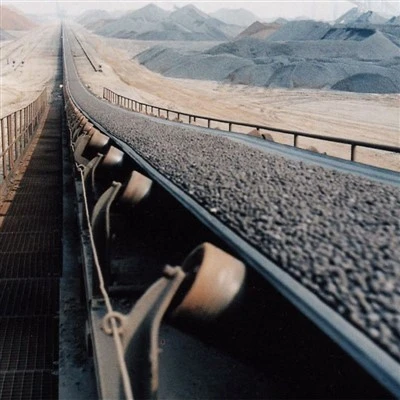
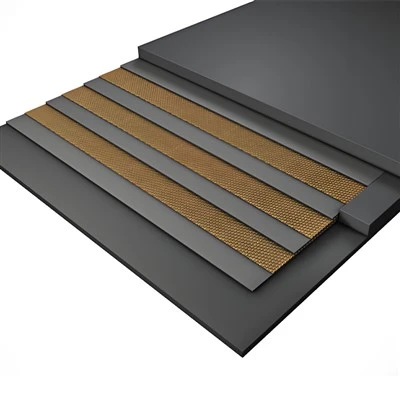
First, let’s get the basics straight: tensile strength in solid woven conveyor belts isn’t just a number on a spec sheet—it’s the maximum amount of pulling force a belt can handle before it breaks. Solid woven belts get their name from their construction: layers of high-tensile fabric, usually polyester or nylon, woven tightly into a single, uniform carcass, then coated with rubber or thermoplastic to resist abrasion, impact, and moisture. That woven design is what sets them apart from lighter, less durable conveyor belts: they don’t have loose cords, gaps, or weak points that can snap under heavy tension. That’s why their tensile strength is measured differently than, say, a light-duty belt used for retail packaging.
The standard unit for measuring tensile strength in conveyor belts is pounds per inch of width (PIW) in the U.S., or newtons per millimeter of width (N/mm) in most other parts of the world. For solid woven belts, tensile strength ranges from as low as 100 PIW for light, intermittent uses like small factory parts transport up to 12,000 PIW for heavy-duty mining or quarry operations. That range is huge, and picking the wrong end of it is where most mistakes happen. Too low, and the belt will stretch too much under load, slip in the pulleys, or snap mid-operation. Too high, and you’re paying for more strength than you need, which can make the belt unnecessarily rigid, hard to splice, and more expensive long-term.
Let’s talk about what factors actually determine a solid woven belt’s tensile strength. It’s not just how thick the belt is, though thickness plays a part. The main drivers are the type of fabric used, the weave pattern, and the number of plies (layers) in the carcass. Polyester fabrics, for example, have high tensile strength and low stretch, making them ideal for operations where the belt has to maintain its length under load. Nylon fabrics, on the other hand, have even higher tensile strength but more stretch, so they’re often used for long-distance conveyors where stretch can be adjusted for without impacting performance. The weave matters too: a tight, balanced weave, like a plain or twill weave, distributes tension evenly across the entire carcass, eliminating weak spots that can cause premature failure. Even the coating—usually nitrile, rubber, or PVC—can impact tensile strength, though the fabric core is always the main factor.
Now, how is tensile strength tested for solid woven conveyor belts? It’s not a random number a supplier pulls out of thin air—there are strict industry standards that govern how it’s measured. The most common standard worldwide is ISO 9864, which sets out a test where a 25mm-wide strip of the belt’s carcass is clamped between two heavy-duty fixtures in a tensile testing machine. The machine pulls the strip at a constant speed until it breaks, and the force at break is divided by the width to get the final tensile strength. In the U.S., the equivalent standard is ASTM D378, which follows a nearly identical process. For solid woven belts, this test is run on the fabric core only, not the coating, because the coating is designed for protection, not tension. That’s why you’ll see tensile strength labeled as “carcass tensile strength” on spec sheets—this is the number you need to focus on, not the overall strength of the finished belt.
I’ve seen so many operators make the mistake of guessing their tensile strength needs, and it almost always ends badly. Last year, a small aggregate mine reached out to me saying their old solid woven belt kept snapping every 30 days, costing them $15,000 in downtime each time. They’d been using a 2,000 PIW belt, but when we tested the load they were moving—150 tons of rock per hour on a 500-foot conveyor, running 16 hours a day—we found they needed a 4,500 PIW belt. The old belt’s strength was just too low to handle the constant pulling force of the heavy load, especially when mixed with the impact of rock falling onto it from the hopper. We swapped it out for a 5,000 PIW belt (to add a small safety margin) and they haven’t had a single break since. That safety margin is another key point: you should always pick a belt with a tensile strength rating 10-15% higher than your calculated maximum required force. Operating right at the edge of a belt’s tensile strength is a recipe for failure, especially in environments with variable loads, uneven pulley alignment, or heavy impact.
Let’s also clear up a common myth: tensile strength isn’t the same as working tension. Working tension is the actual force the belt experiences during normal operation, and it depends on several factors: the length of the conveyor, the weight of the load being carried, the angle of incline, and the friction between the belt, pulleys, and idlers. To calculate working tension, you can use this simple formula: T = (Total weight of load + Weight of belt) × Coefficient of friction. For example, a 100-foot conveyor carrying 10 tons of grain, with a belt weight of 2 pounds per foot and a coefficient of friction of 0.5, would have a working tension of around 11,000 pounds. Divide that by the belt’s width (say 48 inches) and you get 229 PIW of working tension. That means you’d need a solid woven belt with a tensile strength of at least 250 PIW to cover normal operation, plus a 10% safety margin, so a 275 PIW belt. Ignoring the difference between tensile strength and working tension is why so many belts fail early.
Another area where tensile strength comes into play is belt splicing. Solid woven belts are almost never used in one long, continuous piece—they have to be spliced together to form a loop around the conveyor’s pulleys. The strength of the splice is directly tied to the belt’s tensile strength. For a 5,000 PIW solid woven belt, a properly prepared vulcanized splice will have about 90% of the belt’s original tensile strength, while a mechanical splice (used for quick, field repairs) will usually have 60-70% of that strength. If you pick a belt with too low a tensile strength, even a good splice will be too weak to hold the belt under load. I always advise customers to talk through their splicing needs with our team before ordering—we can recommend the right tensile strength to pair with the type of splice they plan to use, whether it’s a permanent vulcanized splice for a mine conveyor or a quick mechanical splice for a temporary material transport system.
So, how do you choose the right tensile strength for your solid woven conveyor belt? Let’s break it down step by step, based on the projects and operations I work with every day:
-
Identify your operation type: Light-duty operations (small factory parts, retail package transport, light grain handling) need 100-1,500 PIW. Medium-duty (aggregate transport, general mining, heavy grain processing) need 1,500-6,000 PIW. Heavy-duty (deep underground mining, quarrying, long-distance bulk material transport) need 6,000-12,000 PIW. That’s a good general starting point.
-
Calculate your working tension: As I mentioned earlier, work out the force the belt will actually experience, including load weight, belt weight, incline angle, and friction. Don’t guess—use the conveyor manufacturer’s specs or hire a consultant if you’re not sure.
-
Add a safety margin: Always add 10-15% to your working tension to account for unexpected loads, variable operation, and wear over time. Belts stretch and weaken slightly as they age, so that margin will keep your belt from failing prematurely.
-
Match to your fabric and weave: If your operation has high impact, go for a tighter weave and polyester fabric for consistent strength. If you have a long conveyor, go for nylon fabric, which has more stretch to absorb tension without breaking.
I’ll also add a note about common mistakes I see as a supplier: some operators think a thicker belt equals higher tensile strength, which is mostly true, but not always. A solid woven belt with 3 plies of 2,000 PIW fabric will have a higher tensile strength than a 2-ply belt with 3,000 PIW fabric, even if it’s thinner. Always check the carcass tensile strength number, not just the thickness, when comparing belts.
At the end of the day, the tensile strength of a solid woven conveyor belt is what makes it capable of handling the tough jobs that lighter belts can’t. It’s not just a spec number—it’s the difference between a conveyor that runs smoothly for 5 years and one that costs you thousands in downtime and repairs every month.
If you’re not sure what tensile strength is right for your operation, or you’ve been dealing with constant belt failures that are eating into your profits, our team is here to help. We’ve worked with operations of all sizes, from small farms to large mining companies, to find the perfect solid woven conveyor belt for their needs, with the right tensile strength, weave, and coating to fit your exact load and operation.
Don’t let the wrong belt derail your operations. Reach out today to discuss your requirements, and we’ll provide a custom solution tailored to your needs.
Aramid Conveyor Belt References
- International Organization for Standardization. ISO 9864:2019, Textile-Conveyor Belts — Method for Determination of Tensile Strength and Elongation at Break.
- American Society for Testing and Materials. ASTM D378-21, Standard Test Method for Tensile Properties of Fabric-Covered Rubber and Plastics Conveyor Belts.
- Conveyor Equipment Manufacturers Association. CEMA Standard 575, Conveyor Belt Design and Selection Guidelines.
- Rubber Manufacturers Association. RMA Conveyor Belt Specifications, 2022 Edition.
Alumina Technology (Qingdao) New Materials Co., Ltd.
As one of the most professional solid woven conveyor belt manufacturers and suppliers in China, we also support customized service. With abundant experience, we warmly welcome you to buy solid woven conveyor belt for sale here and get quotation from our factory. For price consultation, contact us.
Address: No.448, Jiangshan South Road, Huangdao District, Qingdao City, Shandong Province
E-mail: Gloria.zhang@contitech.cn
WebSite: https://www.altechconveyorbelt.com/
