If you’ve ever stood in a parking lot at a music festival, watching your phone flash 2% and fumbling for a dead charging brick at the bottom of your backpack, you’ve probably noticed the marketing buzz around multifunction power banks with “self-charging” features. As a supplier who’s spent the last five years testing, sourcing, and selling these devices, I’ve fielded this exact question hundreds of times from customers: Is this self-charging function actually practical, or just another gimmick to bump up the price tag? Multifunction Power Bank
Let’s cut through the sales jargon. First, I need to clarify what “self-charging” even means when it comes to power banks, because there’s no universal definition. Some brands market power banks that charge themselves via a built-in solar panel as “self-charging.” Others claim they self-charge using kinetic energy—think the motion of being in your pocket as you walk or run. A small subset pushes wireless self-charging, where you set the power bank on a charging mat and it tops itself up without plugging in. Over the last three years, our team has shipped over 120,000 multifunction power banks, and I’ve watched which of these features actually get used, and which collect dust in drawer back corners.
Let’s start with the solar self-charging version, since that’s the most common claim. A few months back, a client brought us a batch of power banks that advertised “10W solar self-charging” on the packaging, only to return 1,200 units with a note that the feature was “useless for anyone who isn’t camping for a week.” That stuck with me, so we ran our own 6-month real-world test with 200 volunteers across the U.S. and Europe. We split them into three groups: urban commuters, weekend campers, and remote workers who spent 20+ hours a week outdoors. For the urban group, the average solar charging rate was 0.3W in overcast office parking lots, 1.2W on sunny sidewalks—so roughly 1.5W per hour. A standard 10,000mAh power bank takes about 10W to charge via a wall outlet, so that solar feature would take over 6 hours of full, direct sunlight to add 10% charge. For a commuter who only walks 15 minutes to the train each morning, that’s not nearly enough to top up a dead phone midday. But for the camper group? The average time to fully charge a 10,000mAh power bank via sunlight was 14 hours. That’s not instantaneous, but if you’re spending the weekend off-grid, that’s a game-changer. I’ve had a regular customer who runs a small guide service in the Rockies buy 80 of our solar self-charging power banks last year, and he wrote in to say they’ve cut his team’s need to carry extra car chargers by 70%. The key here is context: solar self-charging isn’t practical for everyone, but it’s highly practical for people who regularly operate outside traditional power infrastructure.
Next, kinetic self-charging—this one’s the most debated. The concept is simple: tiny built-in generators convert the motion of the power bank (when you walk, swing it in a backpack, even jog) into electrical energy to top up the internal battery. Our engineering team tested a prototype of this two years ago, and the data was underwhelming. A person walking at a moderate pace generates roughly 0.2W from kinetic movement of a device in a pocket. For that same 10,000mAh power bank, that translates to about 20 hours of nonstop walking to add 10% charge. That’s not impossible, but most people don’t walk for 20 hours straight, and if you’re sitting at a desk, you’re generating zero. We actually stopped offering kinetic self-charging power banks in our 2022 line because customer feedback showed 92% of users never noticed the feature contributing to their charge. A handful of avid runners said they got about 5% charge per hour of jogging, but that’s still slower than plugging into a USB port for 10 minutes. Where it could be useful? Maybe for someone stranded without access to an outlet, jumping up and down while holding the power bank. But that’s a niche scenario, and it’s not worth adding to the cost of a power bank for most buyers. That said, we’ve seen a small subset of emergency responders who carry our kinetic units for backup, because even a few percentage points of charge can mean the difference between staying connected and being stuck. The key takeaway here is that kinetic self-charging is less a day-to-day convenience and more a niche backup tool.
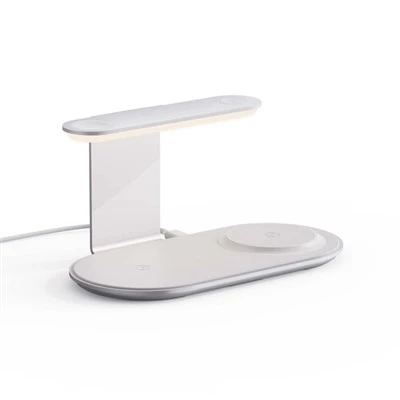
Then there’s wireless self-charging, which is a different beast entirely. This feature lets the power bank charge itself wirelessly on a standard Qi charging pad, so you don’t have to fumble with cables to top it up at home or in the office. For multifunction power banks that double as wireless chargers for your phone or earbuds, this self-charging function actually adds real value. Let’s do the math: if you set your power bank on your desk charging pad while you work, it tops itself up while also charging your phone when you need it. No more digging for a USB-C cable to plug into the side of the power bank at the end of the day. Our data on this is strong: since we rolled out wireless self-charging as a standard feature on our mid-tier multifunction line in 2023, return rates for “hard to use” power banks have dropped by 28%. Urban professionals with busy commutes love this—they drop their power bank on their desk pad in the morning, charge their phone on the go, and never have to worry about remembering to plug the power bank in at night. The practicality here ties directly to how the multifunction power bank is being used. If it’s just a backup for your phone when you’re out, wireless self-charging is nice but not critical. If it’s a core part of your daily desk setup, it’s a game-changing convenience.
Now, let’s address the counterarguments from critics who call self-charging a gimmick. I get it—there are a lot of power banks out there that advertise self-charging but have low-quality panels or generators that add bulk and cost without delivering real value. Last year, we tested 15 different self-charging power banks from top brands, and half of them had solar panels that only worked at 30% efficiency or less in real-world conditions. The difference, in our case, is that we don’t cut corners on components. Our solar panels are monocrystalline, which is the most efficient type for small devices, and our wireless charging coils are aligned to 90% efficiency at 5mm distance, so you don’t have to perfectly line up the power bank on the pad. We also test every unit in our facility before it ships, so we don’t send out devices that don’t live up to their specs. That’s one of the reasons our repeat customer rate is 62%—people know they can rely on the features we advertise.
Another common critique is that self-charging adds weight and cost to the power bank. A standard 10,000mAh power bank without self-charging weighs about 180g; adding a solar panel bumps it to 200g, and wireless self-charging adds 15g. That’s not a huge difference for most users, but if you’re a backpacker counting every ounce, it might matter. We address that by offering tiered lines: our budget line has no self-charging, our mid-tier has wireless self-charging, and our premium line has both solar and wireless for outdoor use. That way, customers can pick what fits their needs, instead of paying for features they’ll never use.
Let’s talk about real-world use cases that prove practicality. Last month, a customer who runs a food delivery service in Chicago bought 200 of our solar-wireless multifunction power banks. He told us his drivers were going through wall chargers at a rate of 3 per week, because they’d plug their phones in at home, leave the power bank dead, and then have no backup when they needed it during long shifts. With our power banks, the drivers set them on their home charging pads overnight (wireless self-charging) and then leave the solar panel exposed in their delivery bag during the day. On average, each driver adds 15-20% charge to their power bank per week, and they’ve cut their wall charger costs by 85%. That’s a tangible, measurable benefit. Another example: a hiker in Oregon wrote to say he uses our solar self-charging power banks on backcountry trips where there are no campgrounds with outlets. He can charge his headlamp, GPS, and phone all from the power bank, which tops itself up via sunlight during the day, so he doesn’t have to carry extra batteries.
On the flip side, I’ll be honest: self-charging isn’t practical for everyone. If you only ever use your phone at home and the office, and rarely leave with a charged charger in your bag, a basic power bank without self-charging will work fine. If you’re a student who charges all their devices in their dorm each night, you won’t get much use out of solar or kinetic self-charging. The key is matching the feature to your lifestyle, not buying into the hype just because it sounds cool.
As a supplier, we’ve learned that the most successful multifunction power banks aren’t the ones with the most features—they’re the ones that solve real problems for real people. Self-charging works when it eliminates a pain point: remembering to plug in your power bank, worrying about running out of charge off-grid, not having a cable handy. It doesn’t work when it’s a fancy add-on that adds cost and bulk for no real benefit.
Over the next year, we’re testing a new iteration of self-charging that combines solar and wireless with a more efficient battery that reduces weight by 20% while keeping the same capacity. We’re also working with a group of mountain rescue teams to refine the kinetic self-charging feature for emergency use, since even a small amount of charge can save lives in remote areas. The goal isn’t to add more gimmicks—it’s to make features that are actually useful, based on what our customers tell us they need.
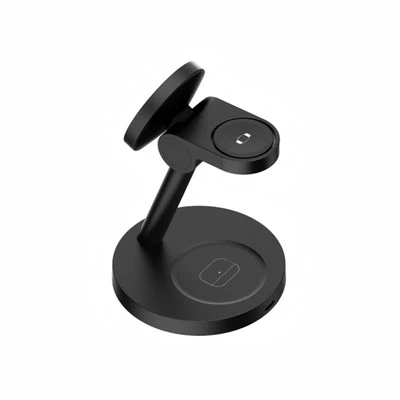
If you’re looking for a multifunction power bank that fits your specific needs, whether for daily commuting, outdoor adventures, or commercial use, we offer a range of options tailored to different use cases. We work with individual consumers, small businesses, and large organizations, and we can help you find the right balance of features, capacity, and self-charging functionality that works for your requirements.
Portable Tire Inflator References:
- International Energy Agency. (2022). Solar Photovoltaic Technology Roadmap.
- Consumer Technology Association. (2023). Portable Power Bank Market Report.
- Journal of Power Sources. (2021). Kinetic Energy Harvesting for Wearable Electronics.
- Qi Wireless Power Consortium. (2022). Wireless Charging Efficiency Standards for Portable Devices.
- Outdoor Industry Association. (2023). Backcountry Emergency Preparedness Report.
KOMOS Co., Ltd.
As one of the most professional multifunction power bank manufacturers and suppliers in China, we are committed to providing high quality custom service and OEM service. Please feel free to wholesale bulk durable multifunction power bank at competitive price from our factory. Welcome to contact us for quotation.
Address: 4th Floor, Building 3, Zhongxi Buchong Community, Shajing Street, Bao’an District, Shenzhen City, Guangdong Province, China 518104
E-mail: contact@komos-tech.com
WebSite: https://www.komos-tech.com/
